 Save
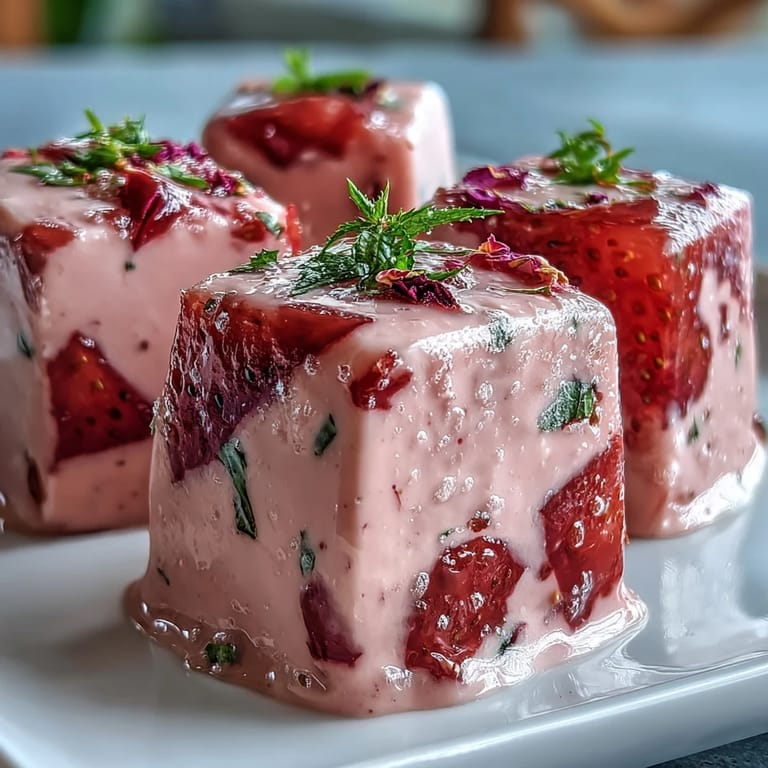
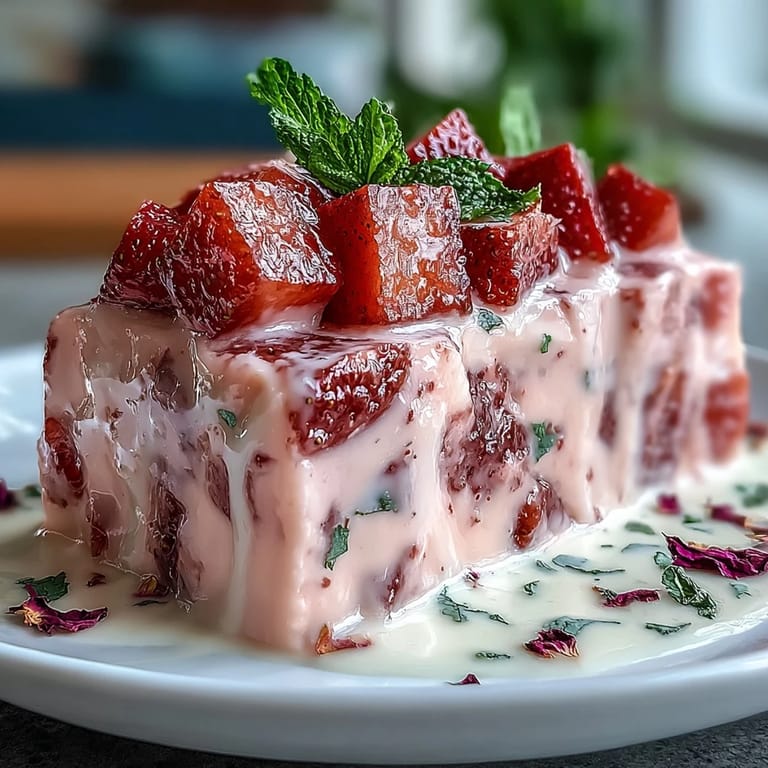
Save The first time I encountered a mosaic cake, it wasn't in a cookbook, but at a friend's backyard gathering, where the glossy cubes shimmered in the sun and sparked endless curiosity. The mesmerizing blend of strawberry and rose seemed almost too beautiful to eat, but as I sliced through the velvety layers, a gentle aroma floated up that made the moment feel instantly celebratory. I was immediately captivated by the playful mix of colors and scents—no two slices looked the same. There was laughter as the creamy base jigged on our plates, each bite tasting of summer air and soft florals. This version became my canvas for kitchen creativity, and now, it's the dessert I bring out to impress even the most discerning sweet tooth.
One afternoon, as clouds gathered for a summer storm, I made this cake to brighten the mood for my family. My little cousin propped herself on a kitchen chair, poking at the jiggling strawberry cubes and declaring that it looked like edible stained glass. Even my usually stoic grandfather couldn't help but smile at the first spoonful, and the entire table agreed: this was a dessert worth repeating.
Ingredients
- Strawberry-flavored gelatin: The instant packet delivers a bold berry hue and flavor; be sure the water is truly boiling for a smooth set.
- Unflavored gelatin: Absolute clarity and bounce—bloom it first to avoid pesky lumps for both the rose layer and cream base.
- Rose water: Just a splash creates an elegant note; start with less and taste, since florals can be fickle.
- Granulated sugar: Sweetens the rose layer, balancing its perfume—dissolve it completely so no grains linger.
- Pink food coloring (optional): Use sparingly for that ethereal blush; I’ve even skipped it for a subtler look.
- Whole milk: Gives creaminess and body; I like to infuse it on the stove for deeper flavor.
- Heavy cream: Adds luxury and silkiness to the filling; don’t let it boil, or it might split.
- Sweetened condensed milk: Layers in sweetness and helps the cake set well; scrape the can to get every drop.
- Vanilla extract: Rounds out all the floral and fruity notes—pure vanilla makes a noticeable difference.
Tired of Takeout? 🥡
Get 10 meals you can make faster than delivery arrives. Seriously.
One email. No spam. Unsubscribe anytime.
Instructions
- Set the strawberry cubes:
- Dissolve the strawberry-flavored gelatin in boiling water until clear and smooth, then pour it into a shallow dish and let it chill until firm—it should wiggle cheerily under your finger.
- Bloom and infuse the rose layer:
- Bloom unflavored gelatin in cold water while mixing sugar and water in a saucepan; once dissolved, remove from heat and stir in the gelatin, rose water, and a whisper of pink food coloring.
- Chill and cube:
- Let both gelatin trays set in the fridge, then slice into uniform 1-2 cm cubes—there’s something oddly satisfying about this part.
- Make the creamy mosaic base:
- Sprinkle unflavored gelatin over cold water, let it bloom; in a saucepan, heat the milk and cream just until tiny bubbles appear, then stir in the bloomed gelatin, sweetened condensed milk, and vanilla, cooling until it’s barely warm and pourable.
- Arrange the mosaic:
- Tumble the strawberry and rose cubes gently together, then scatter them into a 10-inch ring or bundt mold for a marbled effect.
- Pour and set:
- Pour the cooled cream mixture over the cubes, tapping the mold on the counter to coax out air bubbles, and slide the whole creation into the fridge to set completely.
- Unmold and unveil:
- When firm, briefly dip the mold in warm water, invert onto a platter, and listen for that satisfying plop before revealing your mosaic masterpiece; slice and serve, chilled and radiant.
 Save
Save 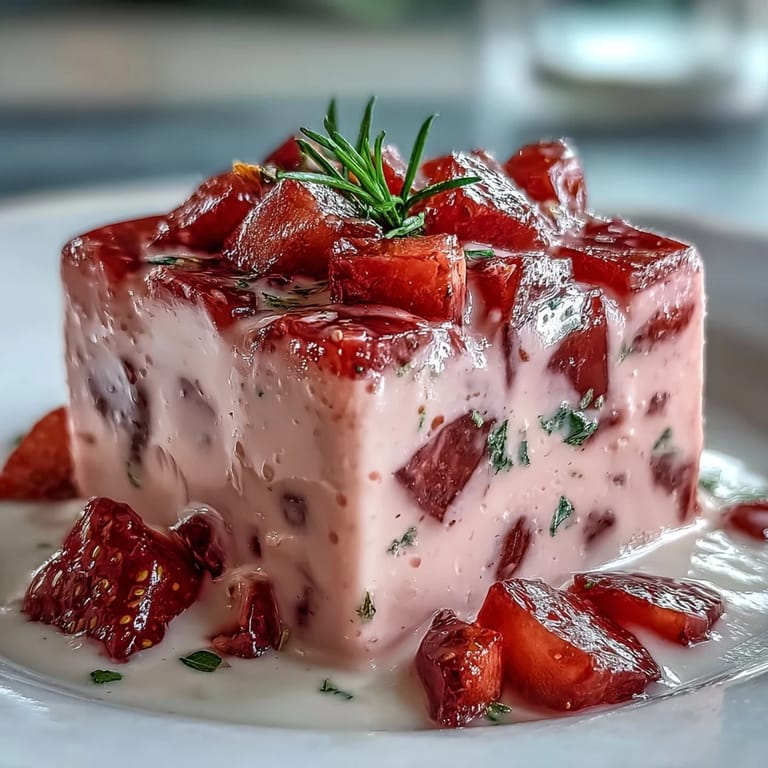 Save
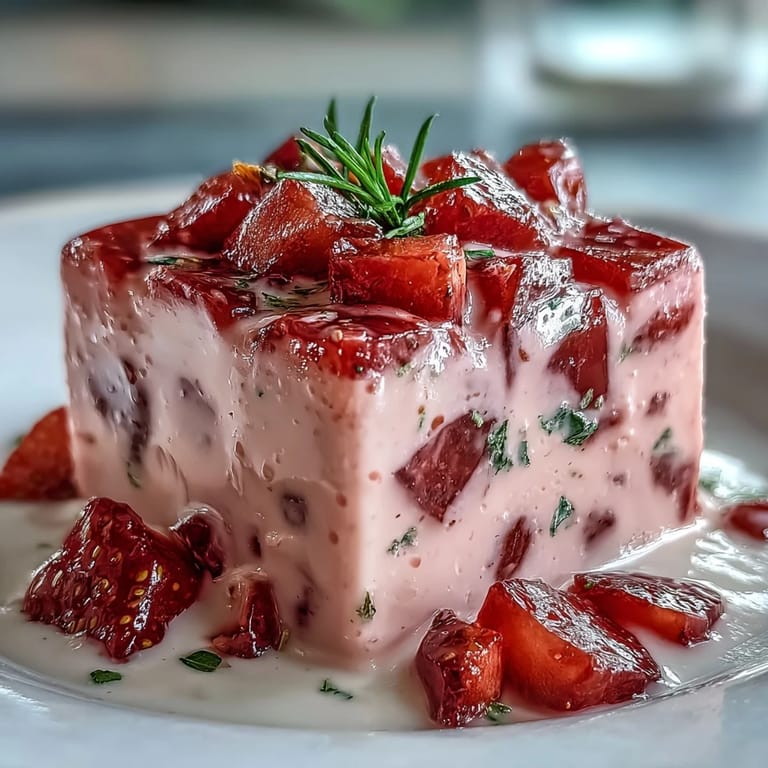
Save There’s magic in the way my friends gasp when I unmold this cake—the quiet anticipation, the suspense of whether it’ll come out clean, and then the collective delight when the jewel-like colors shimmer in the afternoon light.
How to Personalize Your Mosaic Cake
If you’re feeling adventurous, swap in mango cubes or infuse the cream with subtle citrus zest—there’s plenty of room to experiment. Adding edible flowers or layering in different flavored gelatins has kept this cake fresh, even for those who’ve had it many times. Once, I tried elderflower for the rose layer and my guests played “guess the floral note”—a playful twist for any occasion.
Choosing the Right Mold
From silicon rings to classic metal bundt pans, the choice of mold affects both look and unmolding ease—silicone is the friendliest for beginners. I once attempted a vintage glass mold, which worked beautifully after a careful warm-water dip. Whatever you use, grease isn’t necessary, but double check that your cubes are scattered in a way that’ll look pretty once sliced.
Finishing Touches and Serving Ideas
Garnishing makes a big difference: a halo of fresh strawberries, edible rose petals, or even a drizzle of condensed milk right before serving brings the cake to life. For parties, I love slicing each wedge on a chilled plate to keep everything lifted and sparkling.
- Don’t skip tapping the mold—it prevents unsightly air pockets.
- Keep a thin knife handy for clean, confident slices.
- Remember to check your gelatin source for dietary needs.
 Save
Save 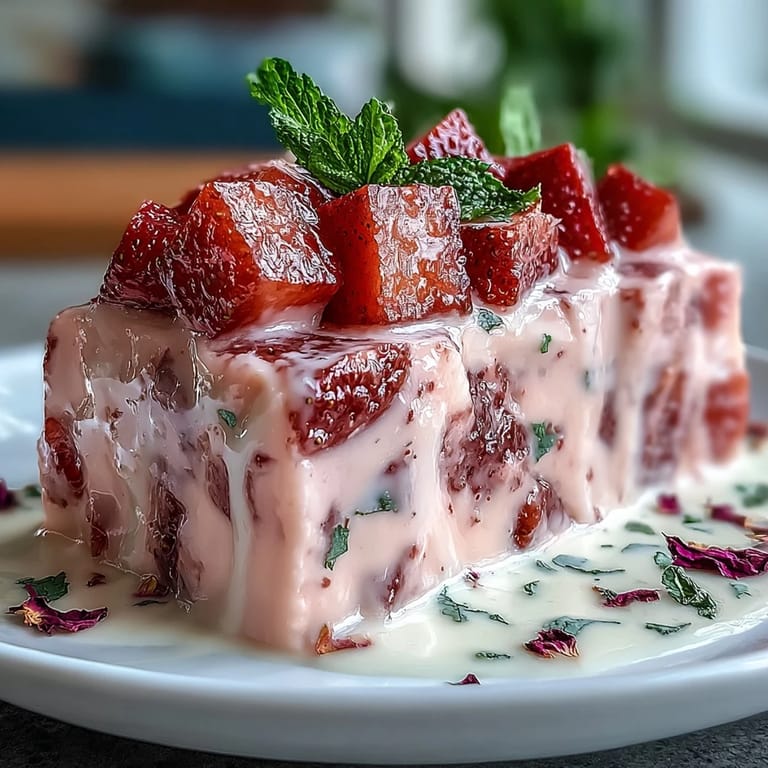 Save
Save This strawberry rose mosaic cake is a dessert that always dazzles—equal parts playful and refined. I hope you enjoy making it as much as you’ll love sharing the colorful slices with friends.
Recipe FAQs
- → How do I ensure the gelatin cubes hold their shape when cut?
Chill the flavored gels until fully firm (at least an hour) before cutting. Use a sharp knife dipped in warm water and cut with steady strokes to keep clean edges.
- → Can I boost the strawberry flavor in the cream base?
Gently steep a few sliced strawberries in the warm milk before combining with gelatin, then strain. This adds natural fruit aroma without affecting texture.
- → What is the best way to prevent air bubbles when pouring the cream?
Let the cream mixture cool until just lukewarm so it remains pourable but not hot. Pour slowly and tap the mold on the counter to release trapped air.
- → How long should the mold chill to fully set?
Allow at least 3 to 4 hours in the refrigerator; longer (up to overnight) ensures the center is fully firm and easier to unmold cleanly.
- → How can I adapt this for a vegetarian or vegan approach?
Use a plant-based gelling agent such as agar-agar or a commercial vegan gelatin substitute, following that product's setting instructions, and swap dairy for coconut cream or other plant milks.
- → Any tips for unmolding without the mosaic falling apart?
Briefly dip the outside of the mold in warm water for a few seconds to loosen the edges, then invert onto a plate in one confident motion to release the set loaf intact.