 Save
Save I used to think eggplant was boring until a neighbor brought over roasted halves drizzled with yogurt and scattered with jewel-like pomegranate seeds. The contrast between the smoky, tender flesh and the bright, tangy topping was a revelation. I stood in her kitchen that evening, watching her score the eggplant with confident slashes, and realized I had been underestimating this vegetable my whole life. Now, this dish shows up on my table whenever I want something that feels special without the fuss.
The first time I made this for a small dinner party, I worried it might be too simple. But when I brought the platter to the table, the colors alone made everyone pause. The ruby-red seeds against the pale yogurt and charred eggplant looked like something from a restaurant. My friend Layla, who grew up eating dishes like this, nodded approvingly and said it reminded her of home, which felt like the highest compliment I could receive.
Ingredients
- Eggplants: Choose firm, glossy ones without soft spots. Scoring them in a crosshatch lets the olive oil seep in and helps them cook evenly.
- Olive oil: Do not skimp here. The eggplant soaks it up like a sponge, and it is what gives you those golden, caramelized edges.
- Salt and black pepper: Simple seasonings that let the eggplant shine. You can always add more later, but start with enough to flavor the flesh as it roasts.
- Greek yogurt: Full-fat gives you the creamiest sauce, but low-fat works if that is what you have. Just make sure it is thick and tangy.
- Garlic: Grate it finely so it dissolves into the yogurt without leaving harsh chunks. Fresh garlic makes all the difference here.
- Lemon juice: Brightens the yogurt and balances the richness. Freshly squeezed is always better than bottled.
- Pomegranate seeds: They add bursts of sweetness and a satisfying pop. If you cannot find fresh, frozen works too, just thaw them first.
- Fresh mint and parsley: The herbs bring freshness and a hint of green that makes the dish feel alive. Chop them just before serving.
- Toasted pine nuts: Optional, but they add a buttery crunch that I find hard to resist. Watch them closely while toasting, they burn fast.
- Sumac: A tangy, slightly fruity spice that adds a final flourish. If you do not have it, a little extra lemon zest works in a pinch.
Tired of Takeout? 🥡
Get 10 meals you can make faster than delivery arrives. Seriously.
One email. No spam. Unsubscribe anytime.
Instructions
- Preheat and prep:
- Get your oven hot and line a baking sheet with parchment. This keeps cleanup easy and prevents sticking.
- Score and season:
- Slice a crosshatch pattern into the flesh of each eggplant half, then brush generously with olive oil. Season with salt and pepper, making sure it gets into the cuts.
- Roast until golden:
- Place the eggplants cut side up and roast for 35 to 40 minutes. You will know they are done when the flesh is deeply golden and collapses at the slightest touch.
- Make the yogurt sauce:
- While the eggplant roasts, whisk together yogurt, grated garlic, lemon juice, olive oil, and salt. Refrigerate it so the flavors meld and it stays cool.
- Assemble and garnish:
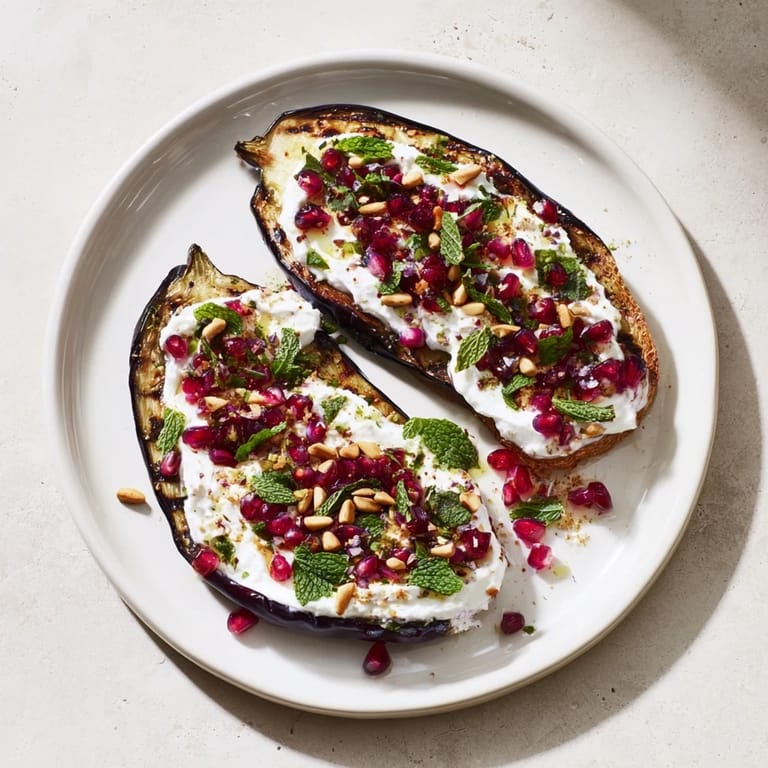
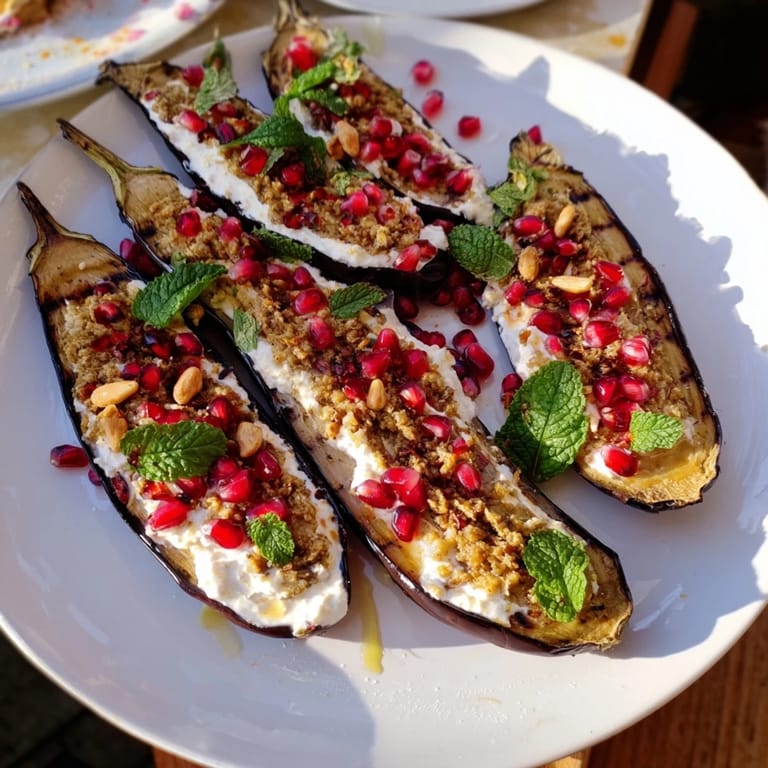
- Let the eggplants cool slightly, then transfer them to a platter. Spoon the yogurt sauce over each half, then scatter with pomegranate seeds, herbs, pine nuts, and a pinch of sumac.
 Save
Save One evening, I served this dish at room temperature as part of a spread with flatbreads and olives. My sister, who usually avoids eggplant, went back for seconds. She said it tasted like something you would eat on a rooftop in Beirut, which made me smile because that is exactly the kind of moment this recipe creates, warm, relaxed, and full of flavor.
How to Pick the Best Eggplant
Look for eggplants that feel heavy for their size and have smooth, shiny skin. Press gently on the flesh. If it bounces back, it is fresh. If it stays dented, it is past its prime and may taste bitter.
Serving Suggestions
This dish works beautifully as a main with warm pita and a simple salad, or as part of a mezze spread alongside hummus, baba ganoush, and stuffed grape leaves. I have also served it as a side with grilled lamb or roasted chicken, and it always disappears first.
Make-Ahead and Storage Tips
You can roast the eggplant up to a day ahead and store it covered in the fridge. Bring it to room temperature before serving, or warm it gently in the oven. The yogurt sauce also keeps well for two days, just give it a stir before spooning it over.
- Reheat eggplant at 180°C (350°F) for about 10 minutes if you want it warm.
- Add the fresh toppings just before serving so the herbs stay bright and the pomegranate seeds do not bleed.
- Leftover eggplant can be chopped and stirred into grains or used as a topping for toast.
 Save
Save This dish has a way of turning a quiet weeknight into something that feels celebratory. I hope it brings the same warmth to your table that it has brought to mine.
Recipe FAQs
- → How should eggplants be prepared for roasting?
Slice eggplants lengthwise and score the flesh in a crosshatch pattern to ensure even roasting and absorption of flavors.
- → What temperature is ideal for roasting eggplants?
Roast at 220°C (425°F) to achieve a tender, golden texture, typically for 35–40 minutes.
- → Can the yogurt sauce be customized?
Yes, mixing Greek yogurt with garlic, lemon juice, olive oil, and salt creates a creamy sauce that can be adjusted for tanginess or consistency.
- → What are some optional toppings to enhance the dish?
Toasted pine nuts add crunch, while fresh mint, parsley, and a sprinkle of sumac offer fresh, aromatic notes.
- → How can this dish be adapted for vegan diets?
Swap Greek yogurt with plant-based yogurt alternatives to maintain creaminess without dairy.