 Save
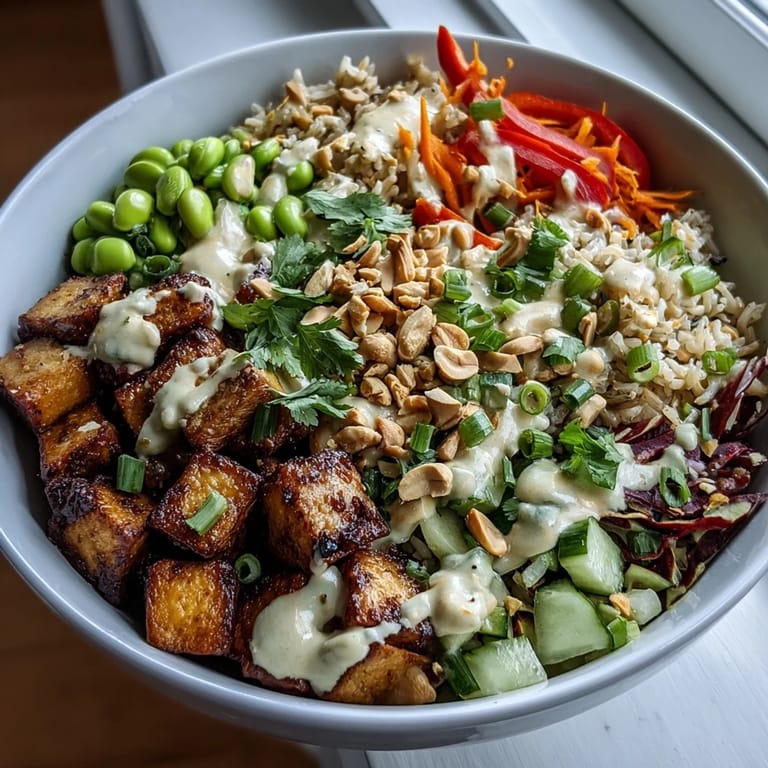
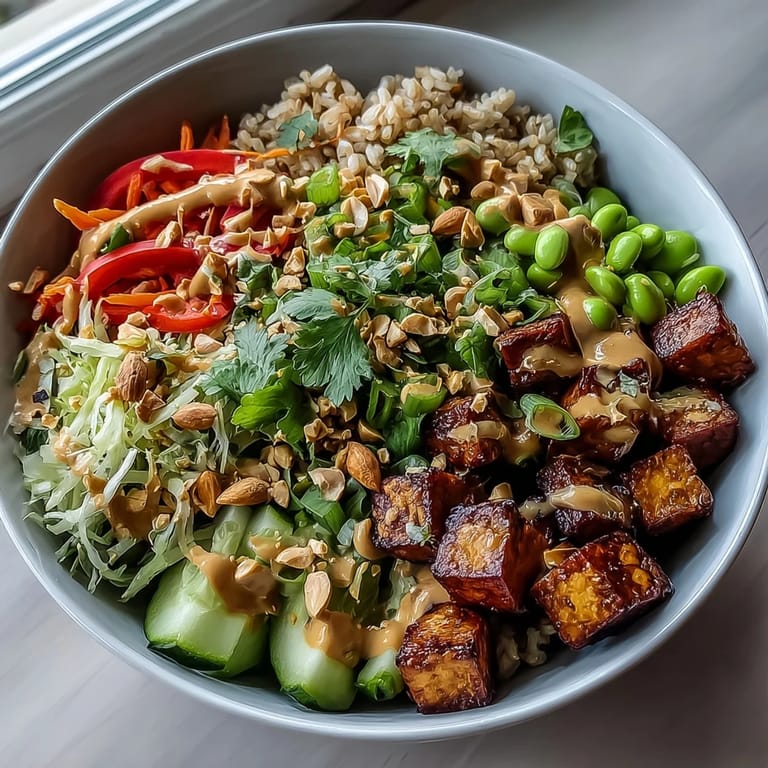
Save My roommate walked into the kitchen one Tuesday evening when I was halfway through assembling what would become my go-to dinner for weeks. She took one look at the vibrant arrangement of vegetables, golden tofu, and that glossy peanut sauce pooling across a bed of brown rice, and asked if she could just... stay and eat with me. That bowl somehow managed to be both deeply satisfying and light enough that we didn't need dessert, just conversation stretching into the night. It wasn't a recipe I'd planned to master, but rather something that evolved from wanting plant-based meals that actually felt like celebrations on a plate.
I made this for my sister during a family gathering where someone had requested something vegan-friendly, and I watched people who normally wouldn't touch tofu go back for thirds. There was something about the creamy peanut sauce binding everything together that dissolved all skepticism, and suddenly we were all debating whether the ginger was too subtle or just right. That afternoon taught me that plant-based cooking isn't about convincing people what they're missing—it's about creating something so delicious that the ingredient list becomes irrelevant.
Ingredients
- Extra-firm tofu (400 g): Press it well—this removes moisture so it crisps beautifully rather than steaming itself in the pan, which I learned after making dense, soggy cubes the first attempt.
- Cornstarch (2 tbsp): This creates that crispy exterior you're after, a trick that changed everything for my tofu game.
- Brown rice or quinoa (200 g uncooked): Both work wonderfully; quinoa adds a subtle nuttiness while rice provides grounding earthiness.
- Carrot, bell pepper, cabbage, cucumber (mixed): The mix of raw and steamed vegetables keeps every bite interesting with different textures.
- Edamame (1 cup): These little green pods add protein and a satisfying pop when you bite them.
- Creamy peanut butter (60 g): Use natural peanut butter if you can—it makes the sauce taste less processed and more intentional.
- Soy sauce or tamari (2 tbsp): Tamari is your friend if anyone's gluten-sensitive, and honestly tastes slightly more refined.
- Rice vinegar or lime juice (1 tbsp): This cuts through the richness of the peanut sauce and brightens everything—lime adds citrus punch while vinegar is more delicate.
- Toasted sesame oil (1 tsp): A small amount goes a long way; it's the secret ingredient that makes people ask what makes this taste so good.
- Maple syrup or agave (1 tbsp): Just enough sweetness to balance the savory and spicy elements without making it taste like dessert.
- Garlic and ginger (1 clove and 1 tsp): Fresh is always better here—minced garlic can burn if your pan's too hot, and fresh ginger adds warmth that powdered can't quite capture.
Tired of Takeout? 🥡
Get 10 meals you can make faster than delivery arrives. Seriously.
One email. No spam. Unsubscribe anytime.
Instructions
- Start your grains cooking:
- Get your brown rice or quinoa going first since it needs the most time—about 25 minutes typically. Use vegetable broth instead of water if you have it; that extra flavor compounds throughout the meal.
- Press and cube your tofu:
- Wrap the block in clean kitchen towel or cheesecloth and set it on a plate with another plate on top weighted down with something heavy—a can, a cast iron skillet, whatever you have. Let it sit while you preheat the oven; this 10-15 minute press makes an enormous difference in the final crispiness.
- Coat and bake the tofu:
- Toss pressed cubes with cornstarch and salt until they look dusty and pale, then drizzle with olive oil. Spread on a baking sheet and bake at 200°C for 20-25 minutes, flipping halfway through—you want golden edges that catch the light.
- Whisk together your peanut sauce magic:
- While tofu crisps, combine peanut butter, soy sauce, maple syrup, rice vinegar, sesame oil, warm water, minced garlic, and ginger in a bowl. Whisk until it flows like silk—if it's too thick, add water a tablespoon at a time until it reaches that perfect drizzle consistency.
- Prep your fresh vegetables:
- Julienne or slice everything—carrot, bell pepper, cucumber—with a steady hand and a sharp knife. This isn't about perfection; it's about creating different sizes so textures vary with each bite.
- Arrange your bowl:
- Start with a generous scoop of fluffy grain as your base, then arrange the components in sections—you're creating edible art here, but more importantly, you're building flavor combinations that work together.
- Finish and serve:
- Drizzle that peanut sauce generously across everything, letting it pool and seep into the grains. Top with roasted peanuts, sesame seeds, and fresh cilantro or mint if you have it on hand.
 Save
Save There's a moment when you're sitting with a full bowl in front of you—steam still rising from the warm rice, the peanut sauce gleaming under the kitchen light—where you realize this is no longer just dinner. It's a small rebellion against the idea that plant-based cooking is restrictive or joyless, a quiet assertion that eating well can taste like indulgence.
The Crispy Tofu Technique That Changed My Game
I spent months making mushy, disappointing tofu until I learned that the cornstarch coating is what separates good from transcendent. The key isn't any fancy seasoning—it's creating a barrier that allows the exterior to brown while the interior stays creamy. Now when someone says they don't like tofu, I know they just haven't had it cooked this way yet, and I've become that friend who insists on cooking it for them once.
Building Flavor Layers in Your Sauce
The peanut sauce works because it's not just peanut butter thinned with water—it's a conversation between sweet, salty, sour, and aromatic elements that all support each other. The garlic and ginger aren't decoration; they're foundational. The rice vinegar cuts through the heaviness of the peanut butter so your palate doesn't get tired. I started appreciating this when I tasted the difference between a sauce I'd rushed and one I'd actually whisked properly, and suddenly the whole dish elevated.
Customizing Your Bowl to Your Moment
What I love most about this recipe is how it adapts to whatever you have and whoever you're feeding. Some nights I add avocado because I'm feeling rich; other times roasted sweet potato because it's cooler outside and I want something warmer. The structure stays the same but the personality shifts. You could swap quinoa for cauliflower rice if you're watching carbs, add sriracha if heat is your love language, or dial back the sesame oil if you prefer subtlety.
- Roasted sweet potato chunks add earthiness and make the bowl feel more like autumn comfort food.
- A handful of fresh mint instead of cilantro shifts the whole vibe toward something lighter and more summery.
- If you make extra peanut sauce, it keeps in the fridge for three days and transforms sandwiches and grain bowls all week long.
 Save
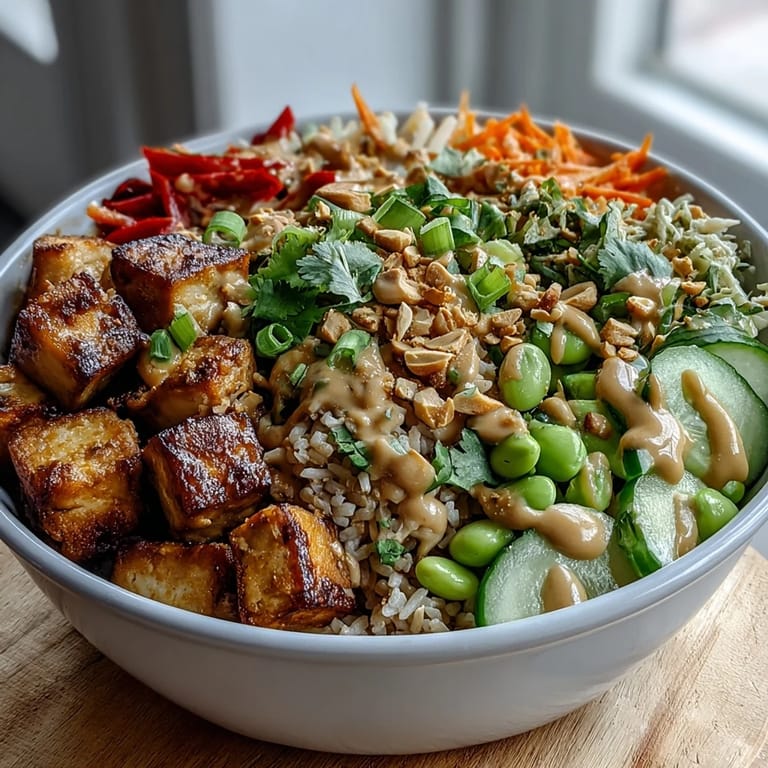
Save This bowl became my answer to the question I kept asking myself: what does nourishing, exciting, plant-based food actually look like? It's colorful and intentional without being precious, satisfying without heaviness, and somehow elegant enough to serve to people who don't yet know they love vegan cooking. Make it once and you'll find yourself making it again.
Recipe FAQs
- → How do I get the tofu really crispy?
Press your tofu for at least 15 minutes to remove excess moisture, then toss cubes thoroughly with cornstarch before cooking. Bake at 200°C (400°F) for 20–25 minutes, flipping halfway, or pan-fry until golden brown on all sides. Don't overcrowd the pan or baking sheet.
- → Can I make the peanut sauce ahead of time?
Yes, the peanut sauce keeps well in an airtight container in the refrigerator for up to 5 days. It may thicken when chilled—simply whisk in a tablespoon of warm water to reach your desired consistency before serving.
- → What grains work best in this bowl?
Brown rice and quinoa are excellent choices that provide nutty flavor and hearty texture. For lighter options, try cauliflower rice, jasmine rice, or noodles like soba or rice vermicelli. Adjust cooking liquid accordingly.
- → How can I add more protein?
Beyond the tofu and edamame, consider adding chickpeas, lentils, or hemp seeds. Tempeh works beautifully as a tofu alternative. If not strictly vegan, a hard-boiled egg or grilled chicken could complement the bowl.
- → Is this bowl meal-prep friendly?
Absolutely. Cook grains and roast tofu in advance, then store separately for up to 4 days. Prepare vegetables and store in containers. Keep peanut sauce in a small jar. Assemble fresh bowls throughout the week, or portion everything into containers for grab-and-go lunches.
- → Can I make this nut-free?
For nut-free needs, substitute peanut butter with sunflower seed butter or tahini. Adjust sweetness and acidity to taste—these alternatives have different flavor profiles than peanut butter. Omit peanut toppings or replace with pumpkin seeds.