 Save
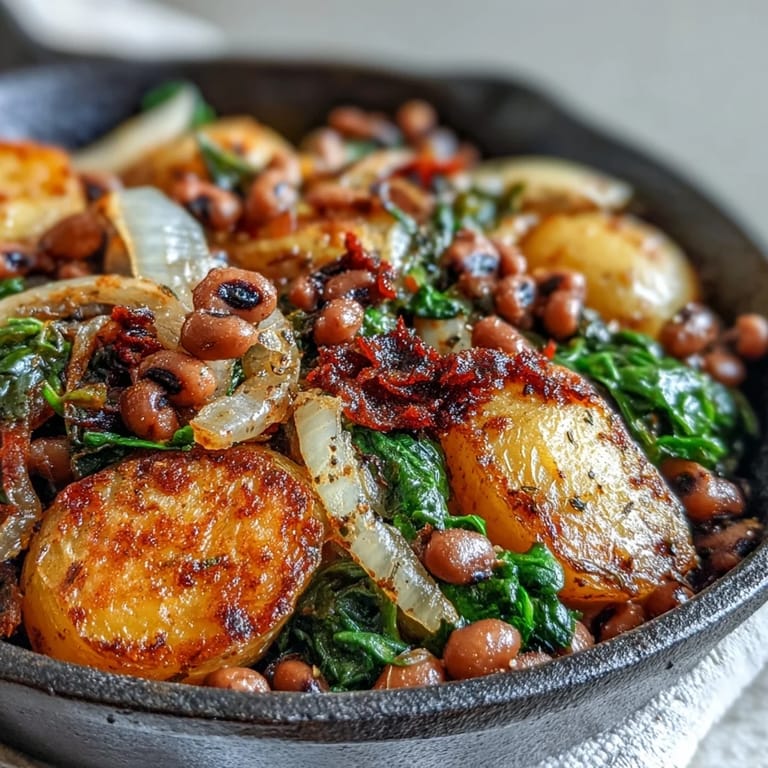
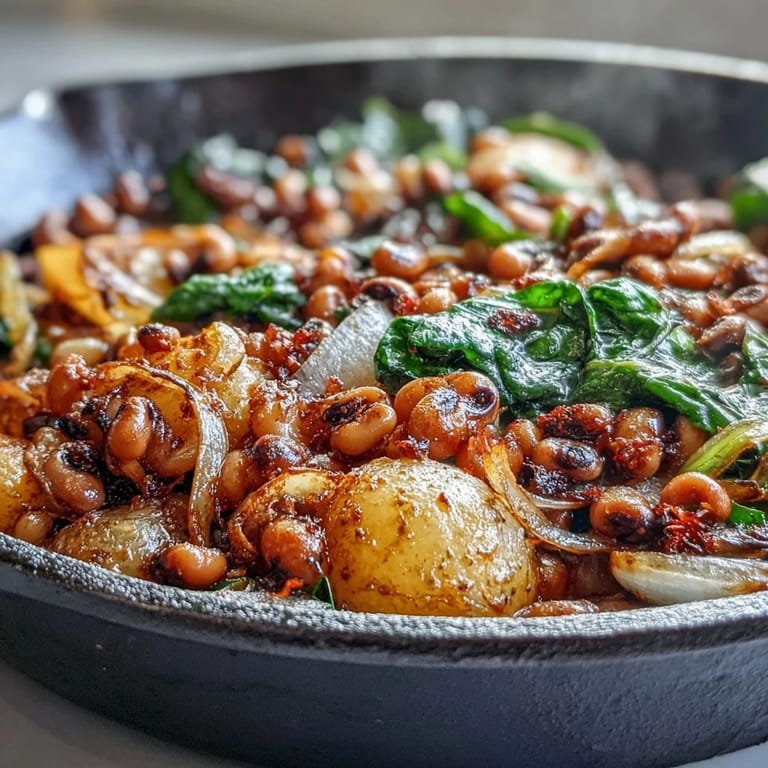
Save There's something about cast iron that makes even the simplest ingredients taste like home cooking. One Thursday evening, I was standing in front of my pantry with a half-can of black-eyed peas, some potatoes that needed using, and absolutely no plan, when I realized I could throw it all together in one skillet and have dinner ready before my roommate got back. That first bite—with the crispy golden potatoes, the tender peas, and that smoky paprika hitting just right—turned into something I've made at least twice a month ever since.
I made this for friends who were skeptical about vegetarian dinners, and watching them come back for seconds without realizing there wasn't any meat in it felt like a quiet victory. One of them asked for the recipe right there at the table, which is when I knew it had passed the real test—not fancy, just genuinely good.
Ingredients
- Olive oil: Two tablespoons is enough to build the base without making everything greasy—use good quality if you can because you'll taste it.
- Large yellow onion, thinly sliced: The onions are your foundation, and slicing them thin means they caramelize evenly and almost melt into the dish.
- Yukon Gold potatoes, diced: These have a creamy texture that holds its shape better than russets, and they turn golden and slightly crispy on the edges in the skillet.
- Fresh spinach, roughly chopped: Don't use baby spinach here—regular spinach has more body and won't disappear into nothing.
- Black-eyed peas: Use canned if you're short on time, but rinse them well to remove excess sodium and that canned flavor.
- Garlic, minced: Three cloves is the right amount to flavor the whole dish without overpowering it.
- Smoked paprika: This is what gives the skillet its warm, slightly smoky character—regular paprika won't do the same thing.
- Dried thyme: A quiet herb that ties everything together without announcing itself.
- Crushed red pepper flakes: Optional, but they add a gentle warmth if you want a little kick.
- Low-sodium vegetable broth: This helps the potatoes finish cooking and brings all the flavors together.
- Fresh parsley and lemon wedges: Optional but recommended—the brightness cuts through the earthiness beautifully.
Tired of Takeout? 🥡
Get 10 meals you can make faster than delivery arrives. Seriously.
One email. No spam. Unsubscribe anytime.
Instructions
- Get your skillet ready:
- Heat the olive oil in a large cast iron skillet over medium heat until it shimmers. You want it hot enough that the oil moves easily but not smoking—this is where the magic starts.
- Soften the onions:
- Add the sliced onion and let it cook for 3–4 minutes, stirring occasionally, until it turns translucent and smells sweet. Don't rush this step; these onions are building the flavor foundation.
- Toast the potatoes:
- Stir in the diced potatoes and cook for 10–12 minutes, stirring every few minutes, until they're golden on the edges and just beginning to feel tender when you pierce them with a fork. This is when the skillet starts to smell really good.
- Bloom the spices:
- Add the garlic, smoked paprika, thyme, and red pepper flakes, stirring constantly for about 1 minute until the kitchen fills with that warm, toasted aroma. This brief cooking step unlocks the flavors.
- Simmer everything together:
- Pour in the vegetable broth and add the black-eyed peas, stirring well. Cover the skillet and let it simmer for 8–10 minutes—the potatoes will finish cooking and the liquid will mostly absorb into the dish, creating something almost creamy without any cream.
- Wilt in the spinach:
- Uncover the skillet, add the chopped spinach, and stir for 2–3 minutes until it's completely wilted and dark green. The residual heat does all the work here.
- Season and serve:
- Taste everything and add salt and black pepper to your preference. Top with fresh parsley if you're using it, squeeze of lemon, and serve straight from the skillet while it's hot.
 Save
Save There's a quiet satisfaction in serving something from a single skillet, especially when it's substantial enough that no one asks what the main course is. This dish has become the meal I make when I want everyone at the table to feel taken care of without me spending hours in the kitchen.
Cast Iron is Your Friend Here
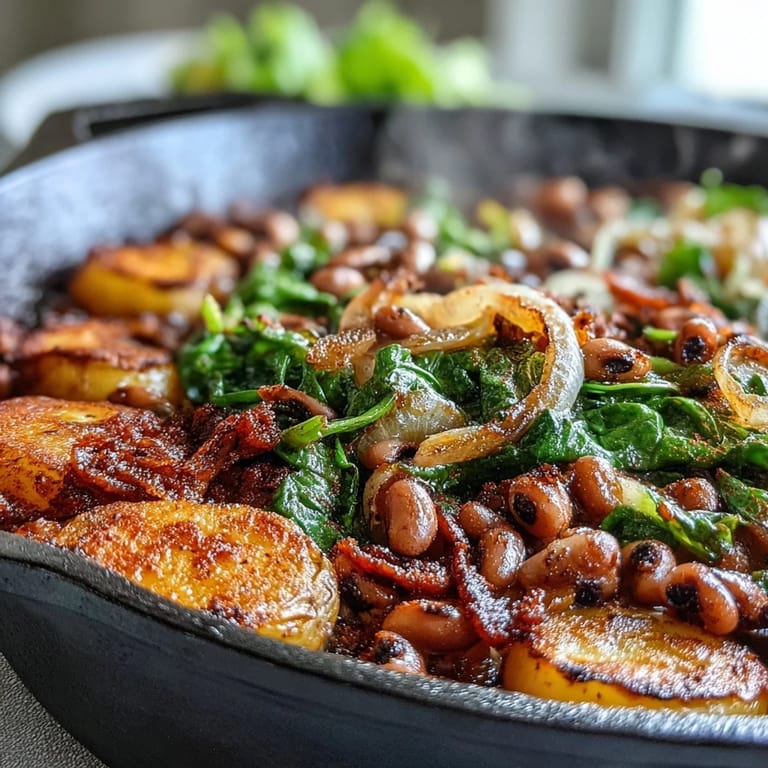
A cast iron skillet holds heat differently than stainless steel or non-stick—it distributes warmth evenly and creates those golden, slightly crispy edges on the potatoes that you can't quite replicate any other way. If you don't have cast iron, a heavy-bottomed Dutch oven or large sauté pan works, but you'll lose a little of that texture. The skillet also goes from stove to table beautifully, which means one less dish and a nice visual moment when dinner arrives.
How to Make This Meal Your Own
The bones of this dish are flexible enough that you can shift things around based on what you have and what you're craving. Some nights I add diced bell peppers with the onions for more sweetness, other times I use kale instead of spinach because it has more texture. The black-eyed peas are the real anchor here—they hold everything together and make the dish feel complete—but almost everything else can be adjusted.
Serving Ideas and Make-Ahead Thoughts
This skillet is excellent on its own, but it also pairs beautifully with cornbread on the side, or a simple grain like rice if you want something more filling. It reheats really well the next day—just add a splash of broth if it's gotten too dry—and actually tastes better as the flavors have more time to meld together. If you're meal prepping, portion it into containers and you'll have lunch ready for three or four days.
- For extra protein, stir in some sautéed tempeh cubes or firm tofu at the end.
- A squeeze of fresh lemon juice right before eating brightens everything up without making it taste acidic.
- If you want more heat, add a diced jalapeño when you sauté the onions or use more red pepper flakes.
 Save
Save This is the kind of dinner that tastes like you made an effort without requiring any special skill or complicated steps. Make it once and it'll become part of your regular rotation.
Recipe FAQs
- → Can I use dried black-eyed peas instead of canned?
Yes, soak 1 cup dried black-eyed peas overnight, then simmer for 45-60 minutes until tender before adding to the skillet. You'll need about 2 cups cooked peas for this dish.
- → What other greens work well in this skillet?
Kale, Swiss chard, or collard greens make excellent substitutions. Add hearty greens like kale a few minutes earlier so they have time to soften properly.
- → How do I store and reheat leftovers?
Store in an airtight container in the refrigerator for up to 4 days. Reheat in a skillet over medium heat with a splash of broth or water, or microwave in 1-minute intervals until heated through.
- → Can I make this dish spicier?
Absolutely. Increase the red pepper flakes to 1 teaspoon, add a diced jalapeño with the onions, or stir in hot sauce at the end to suit your spice preference.
- → What sides pair well with this skillet?
Cornbread, crusty bread, or steamed rice complement this dish beautifully. A simple green salad with vinaigrette also makes a nice fresh accompaniment.
- → Is this suitable for meal prep?
Yes, this dish meal preps wonderfully. The flavors actually improve after a day or two. Portion into containers for easy lunches throughout the week.