 Save
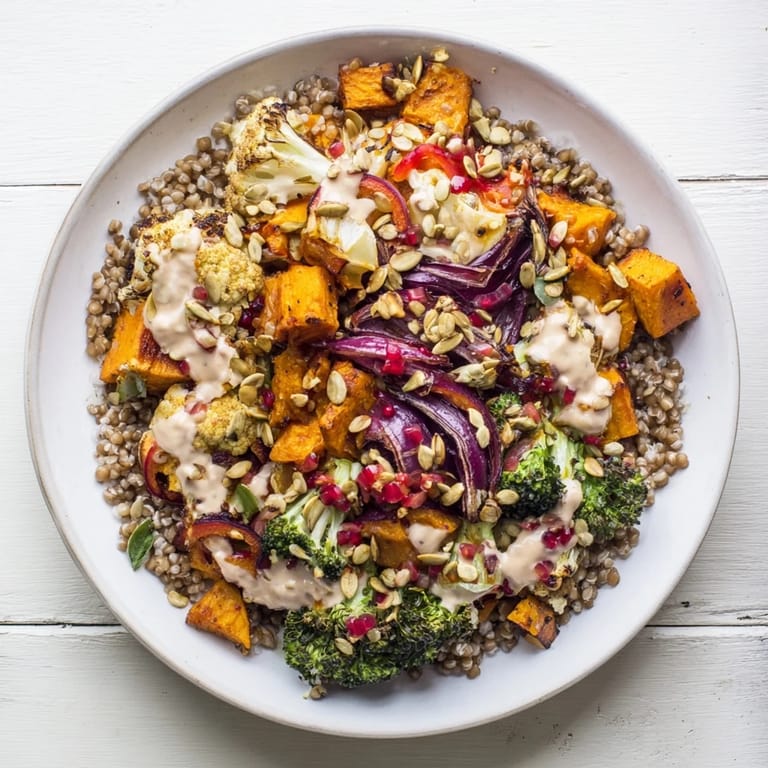
Save I started making grain bowls on Sunday nights when I needed something that could carry me through the week without feeling like leftovers. This one came together after I overbought vegetables at the farmers market and needed a way to use them all at once. The farro was a last-minute swap when I ran out of quinoa, and it turned out to be the best accident—nutty, chewy, and hearty in a way that made the bowl feel like a real meal. Now it's the recipe I make when I want to feel like I have my life together, even when I don't.
The first time I brought this to a potluck, someone asked if I'd ordered it from a restaurant. I laughed because I'd thrown it together that morning in my pajamas, half-asleep. But there's something about the way the roasted vegetables caramelize and the dressing soaks into the farro that makes it look and taste intentional. It became my go-to whenever I wanted to impress without actually stressing.
Ingredients
- Farro: This grain has a chewy, almost pasta-like texture that holds up under all the toppings. Rinse it well to remove any dust, and don't worry if it's slightly al dente—it's supposed to have bite.
- Sweet potato: Cubing it into even pieces means it roasts at the same rate as everything else, no mushy or undercooked spots.
- Red bell pepper: Adds a subtle sweetness that balances the smoky paprika. I've tried orange and yellow too, and they work just as well.
- Zucchini: Slice it thick or it'll turn to mush in the oven. I learned that the hard way.
- Red onion: Roasting mellows the sharpness and gives you these soft, caramelized ribbons that are almost candy-like.
- Broccoli florets: They get crispy edges in the oven, and those little charred bits are the best part of the bowl.
- Olive oil: Use enough to coat everything lightly—it's what makes the vegetables golden instead of steamed.
- Smoked paprika: This is where the warm, slightly smoky flavor comes from. Regular paprika works, but smoked makes it special.
- Tahini: The base of the dressing. It can seize up at first when you add lemon juice, but keep whisking and adding water—it'll smooth out.
- Lemon juice: Freshly squeezed is worth it here. It brightens everything and cuts through the richness of the tahini.
- Maple syrup: Just a touch to balance the tartness. Honey works too if that's what you have.
- Garlic: One small clove is enough. Too much and it overpowers the dressing.
- Parsley: Fresh herbs at the end make it taste alive. Don't skip this step.
- Pumpkin seeds: Toasting them for a few minutes in a dry pan adds crunch and a nutty flavor that ties everything together.
Tired of Takeout? 🥡
Get 10 meals you can make faster than delivery arrives. Seriously.
One email. No spam. Unsubscribe anytime.
Instructions
- Get the oven ready:
- Preheat to 425°F and line your baking sheet with parchment paper. This temperature is hot enough to caramelize the vegetables without drying them out.
- Cook the farro:
- Bring salted water to a boil, add the farro, then lower the heat and let it simmer until tender, about 25 to 30 minutes. Drain any leftover water and set it aside to cool slightly.
- Prep and season the vegetables:
- Spread the sweet potato, bell pepper, zucchini, onion, and broccoli on the baking sheet. Drizzle with olive oil, sprinkle the spices and salt, then toss everything with your hands to coat evenly.
- Roast until golden:
- Slide the pan into the oven and roast for 25 to 30 minutes, stirring halfway through so everything cooks evenly. You'll know it's done when the edges are caramelized and the sweet potato is fork-tender.
- Make the dressing:
- In a small bowl, whisk together tahini, lemon juice, maple syrup, warm water, garlic, and salt. It might look broken at first, but keep whisking—it'll come together into a creamy, pourable sauce.
- Build the bowls:
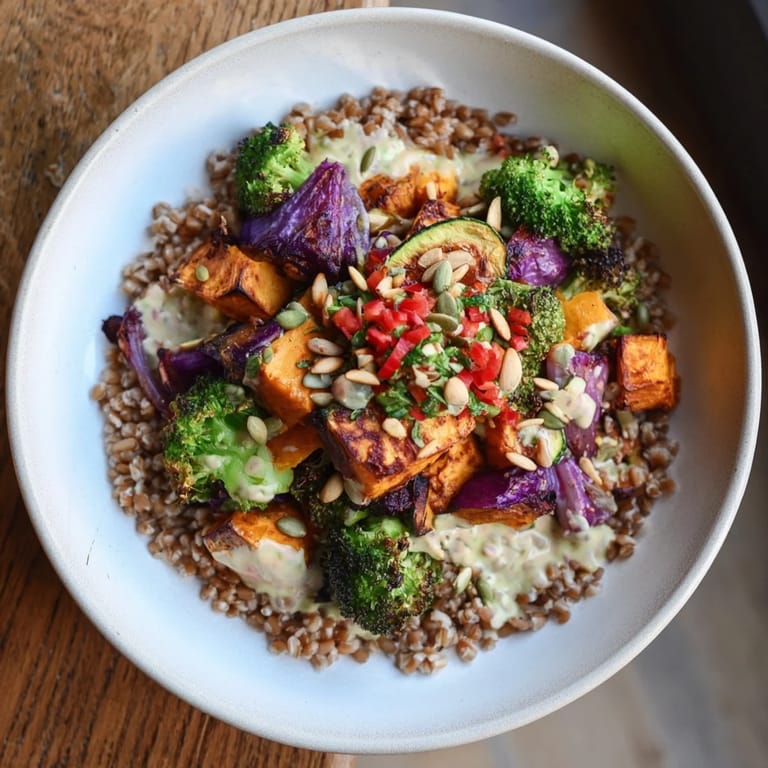
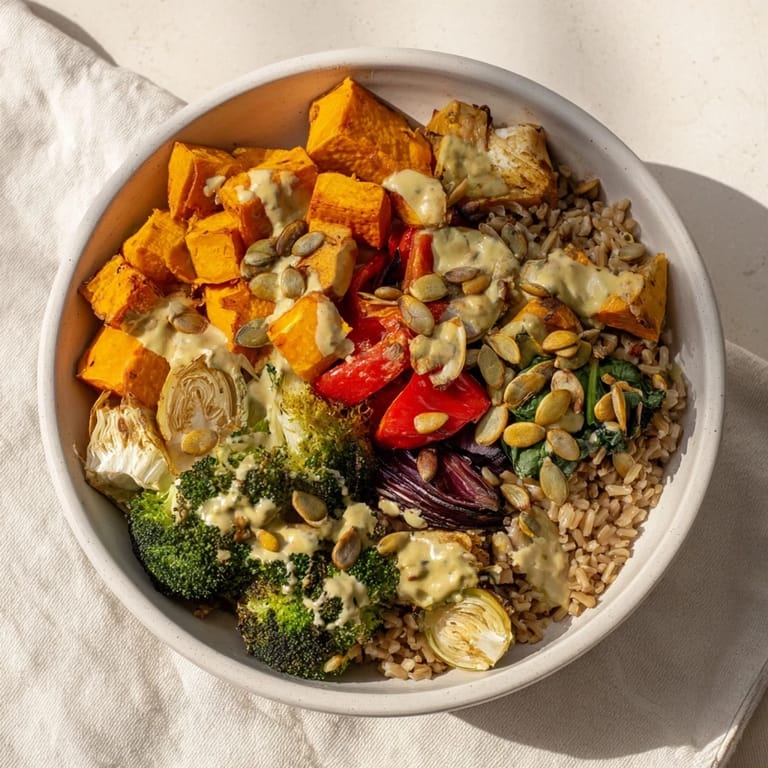
- Divide the farro among four bowls and pile the roasted vegetables on top. Drizzle generously with the dressing, then finish with parsley, pumpkin seeds, and a lemon wedge if you like.
 Save
Save I made this for a friend going through a rough week, and she texted me later that night saying it was the first thing that tasted good in days. That's when I realized this bowl isn't just food—it's the kind of meal that feels like care. It's warm, filling, and bright all at once, and it reminds you that good things can be simple.
How to Store and Reheat
Keep the components separate if you can—farro in one container, vegetables in another, dressing in a small jar. They'll last up to four days in the fridge. When you're ready to eat, reheat the farro and vegetables in the microwave or on the stovetop, then dress and garnish fresh. If you've already assembled the bowl, it still reheats well, though the vegetables might soften a bit more.
Easy Swaps and Variations
If you can't find farro or need it gluten-free, quinoa or brown rice work beautifully. I've also used roasted chickpeas instead of pumpkin seeds for extra protein and crunch. In the fall, I swap zucchini for cubed butternut squash, and in the spring, asparagus and snap peas are perfect. The dressing is flexible too—add a spoonful of miso for depth or a pinch of chili flakes if you want heat.
What to Serve It With
This bowl is filling enough to stand alone, but sometimes I'll add a soft-boiled egg on top or crumble in a little feta if I'm not keeping it dairy-free. A simple side of warm pita or crusty bread is nice for scooping up any leftover dressing at the bottom of the bowl.
- A crisp white wine or sparkling water with lemon pairs well.
- If you want more greens, serve it over a bed of arugula or spinach.
- Leftover dressing is incredible on roasted carrots or as a dip for raw veggies.
 Save
Save This recipe has become one of those meals I make without thinking, the kind that feels like home no matter where I am. I hope it does the same for you.
Recipe FAQs
- → Can I substitute farro with another grain?
Yes, quinoa or brown rice can be used as gluten-free alternatives to farro while maintaining a similar texture and nutrient profile.
- → How do I achieve perfectly roasted vegetables?
Coat vegetables evenly with olive oil and spices, spread them in a single layer on a baking sheet, and roast at 425°F (220°C) until golden and tender, stirring halfway through.
- → What can I use instead of tahini in the dressing?
Almond or sunflower seed butter are good substitutes if tahini is unavailable or if avoiding sesame allergens.
- → How can I make the dressing thinner if needed?
Add warm water gradually while whisking until the desired consistency is achieved without compromising the flavor balance.
- → What toppings complement this bowl well?
Chopped fresh parsley, toasted pumpkin seeds, and lemon wedges add freshness, crunch, and bright acidity to enhance the bowl’s flavors.