 Save
Save There's something about the smell of broccoli hitting a screaming hot oven that stops me mid-thought every single time. My neighbor came over on a random Tuesday evening, and I was experimenting with high heat and green vegetables, mostly because I had them on hand and wanted something interesting for dinner. The moment those florets emerged golden and charred at the edges, she leaned over my shoulder and said, "That smells like a restaurant." It was such a small moment, but it changed how I thought about simple vegetables forever.
I made this for a small gathering last spring when everyone was tired of the same rotation of salads, and it became the dish people actually asked about afterward. One guest who swears she dislikes broccoli went back for seconds, which felt like winning some kind of quiet victory in the kitchen. That's when I realized this wasn't just a side dish—it was a conversation starter that happened to be vegetables.
Ingredients
- Broccoli florets (1 large head, about 500 g): Cut them roughly the same size so they roast evenly; smaller florets crisp up faster and char more dramatically, which is exactly what you want here.
- Extra-virgin olive oil (3 tbsp total): Use the good stuff you actually enjoy the taste of—it's only a few tablespoons, so it matters more than you'd think.
- Lemon (1 whole): Fresh lemon juice and zest are non-negotiable; bottled juice tastes thin and flat by comparison.
- Garlic (1 clove, minced): One clove is gentle enough not to overpower; mince it finely so it distributes evenly through the dressing.
- Sea salt and black pepper: Season in two stages—once before roasting to flavor the broccoli itself, then adjust in the dressing for brightness.
- Shaved Parmesan (about 40 g): Use a vegetable peeler or microplane to create thin shards that melt slightly into the warm broccoli rather than sitting on top like an afterthought.
- Pine nuts or slivered almonds (2 tbsp, toasted): Toasting them yourself takes three minutes in a dry pan and makes them taste alive; it's worth the small effort.
- Fresh parsley (optional): Adds a bright, herbaceous note that ties everything together without heaviness.
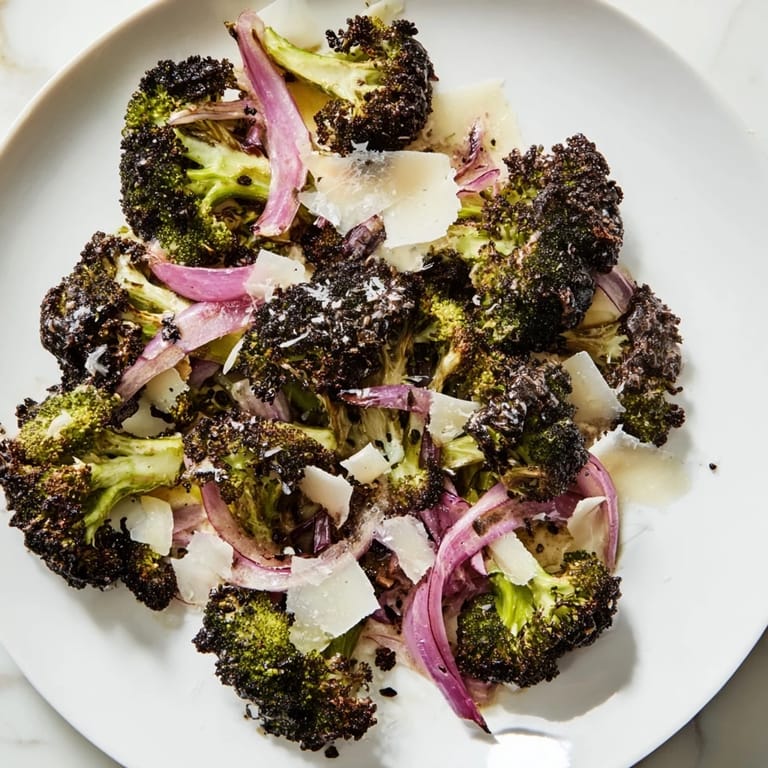
- Red onion (1 small, optional): Thinly sliced and roasted alongside, it softens slightly and becomes almost sweet, but it's truly optional if you prefer the salad to focus entirely on the broccoli.
Tired of Takeout? 🥡
Get 10 meals you can make faster than delivery arrives. Seriously.
One email. No spam. Unsubscribe anytime.
Instructions
- Get your oven ready and prep your broccoli:
- Heat your oven to 220°C (425°F), or if you have an air fryer, set it to 200°C (400°F). Cut your broccoli into florets about the size of a golf ball or smaller—these will roast more evenly than huge pieces.
- Coat and season:
- Toss the florets with 2 tbsp olive oil, half your lemon zest, a pinch of sea salt, and a crack of pepper. Use your hands to make sure every piece gets coated; this is where the flavor begins.
- Spread and roast:
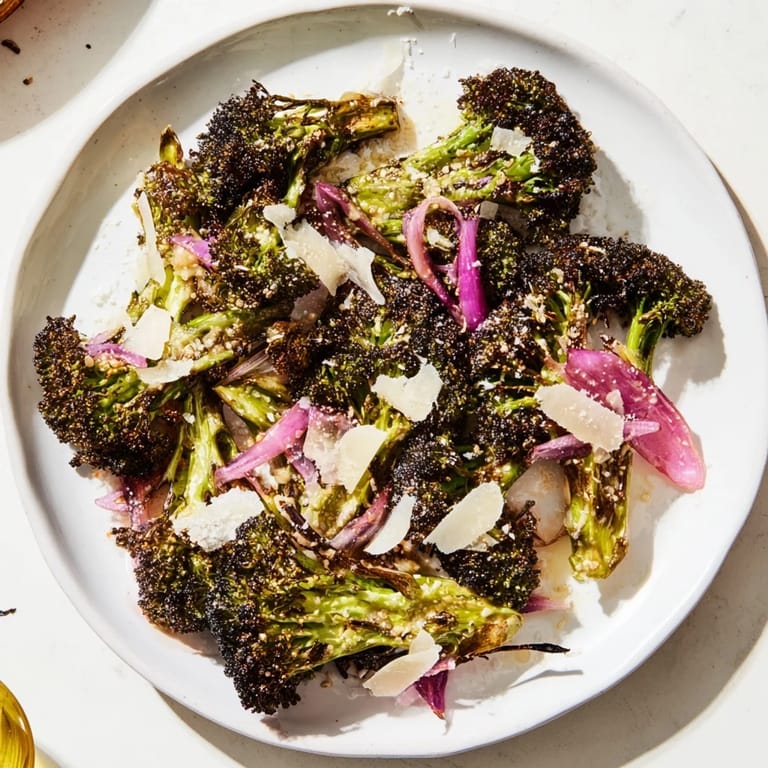
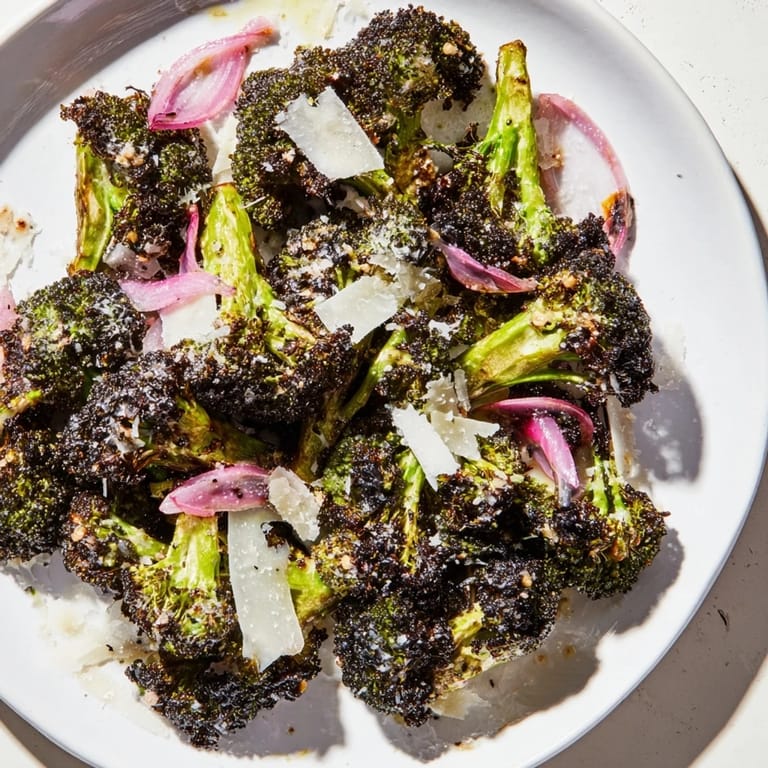
- Arrange the broccoli in a single layer on a baking sheet or in your air fryer basket. Roast for 12–15 minutes, stirring once halfway through, until the edges are dark and charred and the florets are just tender when you pierce them with a fork. The char is the whole point—don't shy away from it.
- Optional onion addition:
- If you're using red onion, scatter the thin slices over the tray or basket in the last 5 minutes of roasting so they warm through without burning.
- Build the dressing:
- While the broccoli roasts, whisk together the remaining 1 tbsp olive oil, minced garlic, fresh lemon juice, and the rest of your lemon zest in a large bowl. Taste it and adjust—you want it bright and punchy, not too salty.
- Toss while hot:
- As soon as the broccoli comes out of the oven, add it (and the onions, if using) directly to the dressing while it's still steaming. Toss everything together so the warm broccoli absorbs the lemon and garlic. This is the magic moment.
- Finish and serve:
- Transfer to a serving platter and top with shaved Parmesan, toasted nuts, and fresh parsley if you have it. Serve warm or at room temperature—it's equally delicious either way.
 Save
Save I served this at a dinner where someone was transitioning to eating more vegetables, and they ate almost the entire bowl without realizing it. Later, they asked what made it different from other broccoli they'd had, and I said simply, "It got hot enough to actually taste like something." That conversation stayed with me because it felt like a small permission slip to stop apologizing for vegetable dishes and start celebrating them.
Why High Heat Changes Everything
Roasting at a high temperature isn't just about cooking the broccoli; it's about transforming it entirely. The intense, dry heat caramelizes the natural sugars in the florets and creates those dark, crispy edges that add complexity and depth. When broccoli is cooked gently, it stays mild and a little forgettable, but when you give it real heat, it becomes nutty and almost sweet, with a texture that's tender on the inside and crisp on the outside. I've learned that most vegetables deserve this same respect—they're often bland not because of what they are, but because we haven't given them the right conditions to shine.
The Power of Finishing Oil and Acid
Adding the lemon and garlic after roasting, rather than before, keeps them bright and fresh instead of letting them burn or lose their punch. The warm broccoli acts like a sponge for the dressing, absorbing the flavors in a way that cold vegetables simply can't. This is a technique I've borrowed from restaurants, and it works because you're respecting the different cooking needs of each component. The broccoli needs high heat to transform; the dressing needs gentleness to stay alive. Bringing them together at just the right moment is where the magic happens.
Making It Your Own
This salad is a foundation, not a rigid prescription. Once you understand how the core components work together, you have permission to experiment with what you have or what sounds good. I've added everything from crispy chickpeas for protein to a scatter of pomegranate seeds for tartness, and each version felt natural rather than forced. The key is keeping the charred broccoli as the star and letting other additions play supporting roles rather than compete for attention.
- A pinch of chili flakes or smoked paprika in the dressing adds subtle heat and depth that makes people ask what they're tasting.
- Swap the Parmesan for Pecorino Romano if you want something sharper, or use a plant-based hard cheese if you're cooking vegan.
- If you don't have pine nuts, almonds, walnuts, or even sunflower seeds toasted in a dry pan work beautifully for that textural contrast.
 Save
Save This salad has quietly become the dish I reach for when I want to prove that vegetables can be genuinely exciting. It's the kind of recipe that feels generous to share because it's so simple and yet so satisfying, and it reminds everyone at the table that sometimes the best food moments come from respecting what you're cooking.