 Save
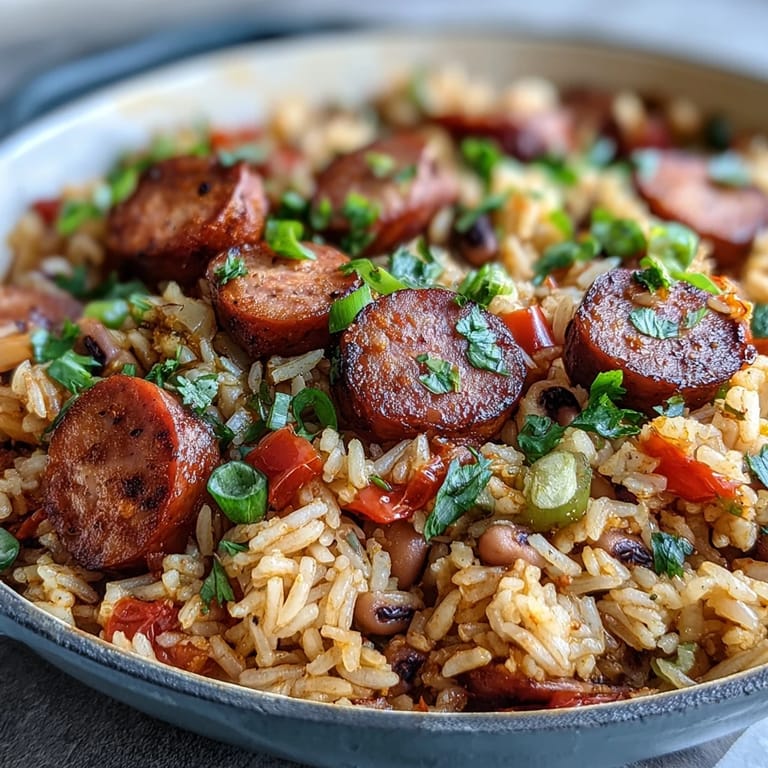
Save My cousin Marcus taught me to make jambalaya on a humid New Orleans afternoon when I was supposed to be helping him prep for a neighborhood cookout. He threw everything into one pot with the confidence of someone who'd done it a hundred times, and within an hour, the whole block could smell what we were making. That first spoonful—the sausage releasing its smoky richness into the rice, the peppers adding sweetness, the black-eyed peas bringing that earthy comfort—made me understand why this dish has survived generations of home cooks who refuse to let it fade.
I made this for my book club on a cold January night when everyone was tired of salads and sad winter meals. Within minutes of setting the pot on the table, the conversation shifted from complaining about the weather to people asking for seconds and thirds. One friend asked if I'd been holding out on them all these years—that's the kind of reaction that makes you realize you've stumbled onto something worth keeping close.
Ingredients
- Smoked sausage (340 g / 12 oz): Andouille is the traditional choice and worth seeking out at a proper butcher or grocery store; if you can't find it, kielbasa works in a pinch and gives you that crucial smoky depth that defines the whole dish.
- Onion, celery, and bell peppers (1 medium onion, 2 celery stalks, 1 red and 1 green bell pepper): This is the holy trinity of Cajun cooking, and don't skip the celery—it's what gives the dish its subtle vegetal backbone.
- Black-eyed peas (1 can, 425 g / 15 oz): Canned ones save you time and honestly work beautifully; drain and rinse them to keep the broth from getting cloudy.
- Long-grain white rice (300 g / 1½ cups): Long-grain rice stays separate and fluffy rather than turning mushy, which is the difference between jambalaya and rice porridge.
- Chicken broth (800 ml / 3⅓ cups): Low-sodium is key because the sausage and seasonings already bring salt, and you want to taste everything, not just salt.
- Diced tomatoes with juices (1 can, 400 g / 14 oz): The juice matters as much as the tomatoes themselves—it adds acidity that brightens the whole pot.
- Cajun seasoning, smoked paprika, thyme, oregano (1½ tsp, 1 tsp, ½ tsp, ½ tsp): These spices are what separate jambalaya from regular rice and sausage; the smoked paprika especially carries the soul of the dish.
- Olive oil (2 tbsp): Use a neutral variety so the heat doesn't burn it and turn the beginning bitter.
- Bay leaf (1): It perfumes the entire pot without being aggressive; always remember to fish it out before serving.
Tired of Takeout? 🥡
Get 10 meals you can make faster than delivery arrives. Seriously.
One email. No spam. Unsubscribe anytime.
Instructions
- Brown the sausage:
- Heat the olive oil in your largest pot over medium heat, then add the sausage slices and let them sit undisturbed for a minute or two so they develop a golden crust. This takes about 4–5 minutes total and releases all the smoky oils that will flavor everything that comes next.
- Build the base:
- Add your diced onion, celery, and both bell peppers to the sausage and let them soften for about 5 minutes, stirring occasionally so nothing sticks. You want them to lose their raw edge but still have a little texture when you add the garlic.
- Wake up the aromatics:
- Stir in the minced garlic and cook for exactly 1 minute—just long enough for the raw bite to disappear and the fragrance to fill your kitchen. Any longer and you risk burning it, which turns the whole thing bitter.
- Toast the rice:
- Add the rice to the pot and stir it around for 2–3 minutes so each grain gets coated in the oil and the vegetable mixture. This step is subtle but important; it prevents the rice from becoming gluey and gives it a slight nuttiness.
- Add the liquid and seasonings:
- Pour in the chicken broth, the can of tomatoes with their juice, the drained black-eyed peas, and all your spices: the Cajun seasoning, smoked paprika, thyme, oregano, bay leaf, salt, pepper, and cayenne if you're feeling brave. Stir everything together so the seasonings distribute evenly and nothing settles to the bottom.
- Simmer gently:
- Bring the pot to a boil, then immediately turn the heat down to low, put the lid on, and leave it alone for 20–25 minutes. Resist the urge to peek constantly; each time you lift the lid, steam escapes and the timing shifts.
- Rest and finish:
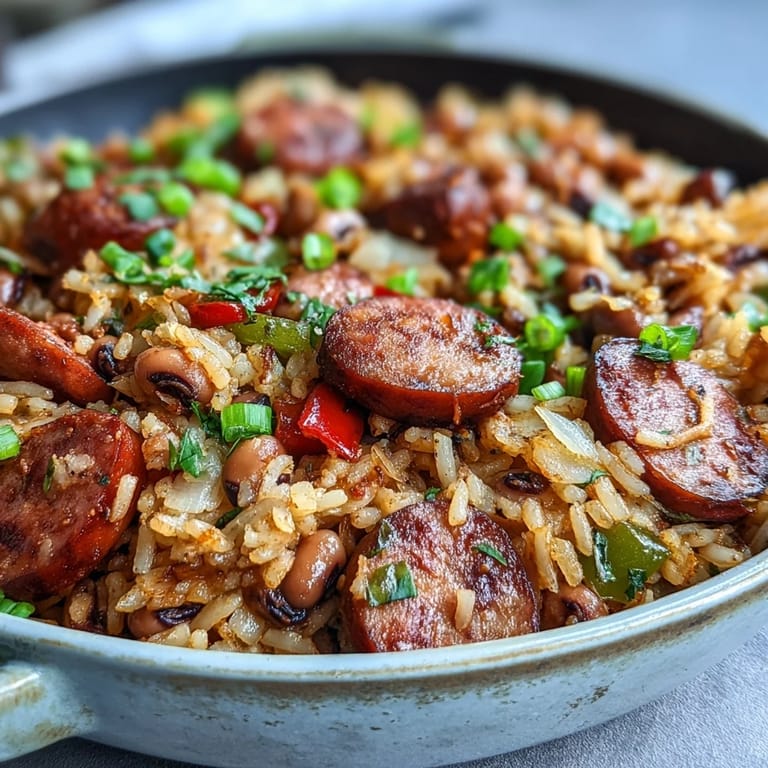
- When the rice is tender and the liquid has been absorbed, remove the pot from heat and let it sit covered for 5 minutes—this final rest lets the rice relax and the flavors settle. Fluff everything gently with a fork, discard the bay leaf, and scatter fresh spring onions and parsley over the top before serving.
 Save
Save My neighbor smelled this cooking from three houses away and showed up at my door with an apology and a hopeful smile. I had made enough to feed six people, and he ended up staying for dinner and telling stories about eating jambalaya at a wedding in Lafayette in 1992.
The Magic of Smoked Sausage
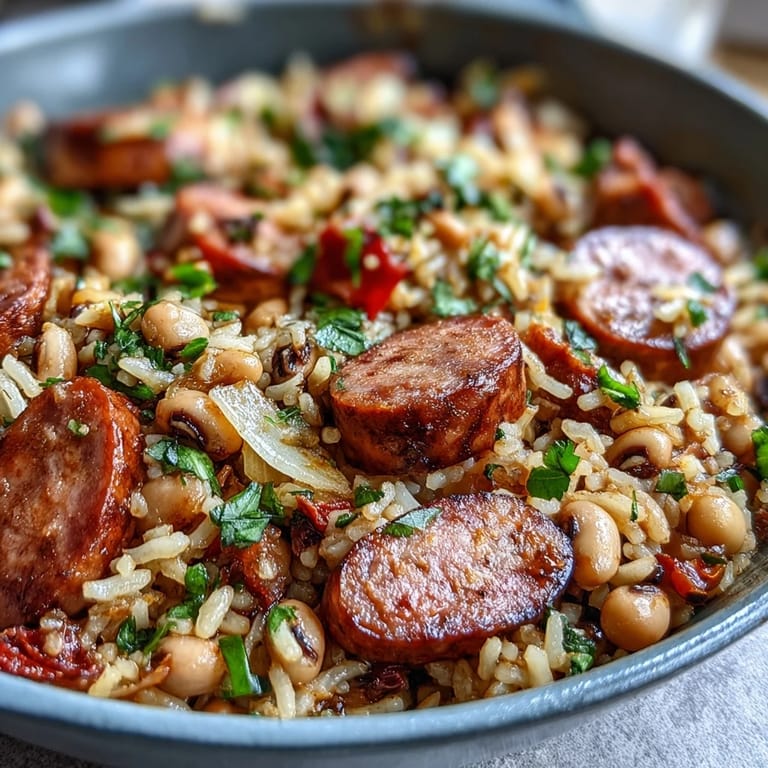
Smoked sausage is doing most of the heavy lifting in this dish, and it deserves respect. The moment it hits the hot oil, it starts releasing these concentrated pockets of flavor that season the entire pot. I learned this the hard way by trying to make jambalaya with regular ground sausage once, thinking it would be the same thing—it wasn't even close. The sliced sausage gives you texture too, little savory bites throughout the rice instead of just diffused flavor.
Playing With Heat
The cayenne pepper in the ingredient list is marked optional, and that's exactly right. I've made this dish for people who want their food to whisper and people who want it to shout, and it works for both camps. Start without the cayenne and taste it at the end; you can always add more heat, but you can't take it back. Some nights I serve the cayenne on the side in a small bowl so people can adjust their own spice level as they eat.
Stretching It and Customizing
This recipe feeds six people as written, but I've easily doubled it for a crowd by using a wider, shallower pot and giving it an extra 10 minutes of simmering time. If you want to make it vegetarian, skip the sausage entirely and use vegetable broth instead; add extra black-eyed peas or some sliced mushrooms for earthiness. You can also throw in diced zucchini, okra, or even a handful of spinach stirred in at the very end—jambalaya is forgiving enough to bend to what's in your kitchen.
- Fresh lime juice squeezed over individual bowls adds brightness that cuts through the richness beautifully.
- Serve with hot sauce on the side and let people control their own adventure.
- Leftovers taste better the next day, so make this on a night when you won't mind enjoying it again.
 Save
Save This is the kind of dish that tastes like someone spent all day cooking, even though you'll have it on the table in an hour. It's comfort food that doesn't apologize for being delicious and filling, and it brings people together around a table in a way that feels natural and easy.
Recipe FAQs
- → What makes this dish authentic Cajun?
The holy trinity of onions, celery, and bell peppers forms the base, while Andouille sausage, Cajun seasoning, and smoked paprika provide that signature Louisiana depth and heat.
- → Can I make this vegetarian?
Absolutely. Simply omit the smoked sausage and substitute vegetable broth for the chicken broth. Add extra black-eyed peas or mushrooms to maintain heartiness.
- → How spicy is this jambalaya?
The Cajun seasoning and optional cayenne provide moderate heat. Adjust either ingredient to suit your preference, or serve with hot sauce for customizable spice levels.
- → Why let it rest before serving?
Letting the covered pot stand for 5 minutes off heat allows the rice to finish absorbing liquid evenly and makes fluffing easier for better texture.
- → What type of rice works best?
Long-grain white rice is traditional as it stays separate and fluffy during cooking. Brown rice will require additional liquid and longer cooking time.
- → Can I use dried black-eyed peas instead?
You'll need to soak and fully cook dried peas separately before adding, as they require much longer cooking time than the canned variety called for here.