 Save
Save I discovered this bowl on a Tuesday afternoon when I had three cans of chickpeas staring at me from the pantry and absolutely no dinner plan. The kitchen smelled like potential—that strange moment before you know what you're making but you sense something good is coming. I grabbed a bottle of peanut butter, thought about what I'd been craving (something crunchy, something warm, something that felt like it mattered), and two hours later I was standing in front of four perfectly assembled bowls that somehow tasted like I'd planned them all week. My roommate took one bite and asked for the recipe before she'd even finished chewing.
I made this for a small group of friends who all had different dietary restrictions, and it was the first time I watched everyone at the table finish their plate and ask for seconds without a single substitution request. Someone asked if it was a restaurant recipe, and I felt oddly proud explaining I'd kind of made it up on the spot. That's when I knew it was keeper material.
Ingredients
- Chickpeas (2 cans, 15 oz each): These need to be drained and rinsed thoroughly—it removes the starchy liquid that would make them steam instead of roast, and trust me, crispiness is everything here.
- Olive oil (1 tbsp): Just enough to coat and help those spices cling, not so much that they get greasy.
- Smoked paprika, ground cumin, garlic powder (1 tsp, 1/2 tsp, 1/2 tsp): This trio is what makes the chickpeas taste like you know what you're doing in the kitchen.
- Salt and black pepper (1/2 tsp, 1/4 tsp): Season generously—these little legumes can take it.
- Brown rice or quinoa (2 cups cooked): The steady base that holds everything together; cook it ahead if you want to make assembly faster.
- Red cabbage, carrots, cucumber, cherry tomatoes (1 cup each, 1 cup): Raw vegetables bring a snap and brightness that makes every bite feel fresh and alive.
- Edamame (1/2 cup cooked): Adds another layer of protein and a pop of green that matters more than you'd think.
- Fresh cilantro (1/4 cup chopped): Don't skip this—it's the final touch that makes people say this tastes like actual restaurant food.
- Creamy peanut butter (1/3 cup): Use something you actually like eating; natural peanut butter works beautifully here.
- Soy sauce (2 tbsp): Use tamari if gluten is a concern, and keep it handy because you'll probably taste as you go.
- Maple syrup or honey (1 tbsp): A whisper of sweetness that balances the salt and heat perfectly.
- Rice vinegar (1 tbsp): Brings brightness and keeps the sauce from tasting flat or one-dimensional.
- Sriracha or chili sauce (1 tsp, optional): Add this only if you like heat, and start with less than you think you need.
- Garlic (1 clove, finely minced): Raw garlic in a sauce means you need to mince it small, so it doesn't come through in harsh little bites.
- Warm water (2–4 tbsp): This is your control—add it slowly until the sauce reaches that pourable, silky stage.
- Roasted peanuts, sesame seeds, lime wedges (2 tbsp, 1 tbsp, for serving): These final toppings are where texture and brightness happen.
Tired of Takeout? 🥡
Get 10 meals you can make faster than delivery arrives. Seriously.
One email. No spam. Unsubscribe anytime.
Instructions
- Set your oven and prep your workspace:
- Preheat to 425°F and line a baking sheet with parchment paper so cleanup won't feel like punishment. This high heat is what makes chickpeas crispy instead of just warm.
- Season and roast those chickpeas:
- Toss drained chickpeas with olive oil and all those spices—paprika, cumin, garlic powder, salt, and pepper—until they're evenly coated and look almost sandy. Spread them on your prepared sheet and roast for 20–25 minutes, shaking the pan halfway through, until they're golden and make a gentle sound when you shake them. You'll know they're done when they smell nutty and toasted.
- Make the peanut sauce while things roast:
- Whisk together peanut butter, soy sauce, maple syrup, rice vinegar, minced garlic, and your sriracha if using. Start with 2 tablespoons of warm water and whisk until smooth, then add more water a tablespoon at a time until it's pourable but still creamy—it should coat a spoon but still move when you tilt the bowl.
- Prepare your vegetables and grains:
- If your rice or quinoa isn't already cooked, get that going according to package instructions. While it cooks, slice your carrots into thin julienne, chop your cabbage, dice your cucumber, halve your tomatoes, and finely chop your cilantro.
- Assemble with intention:
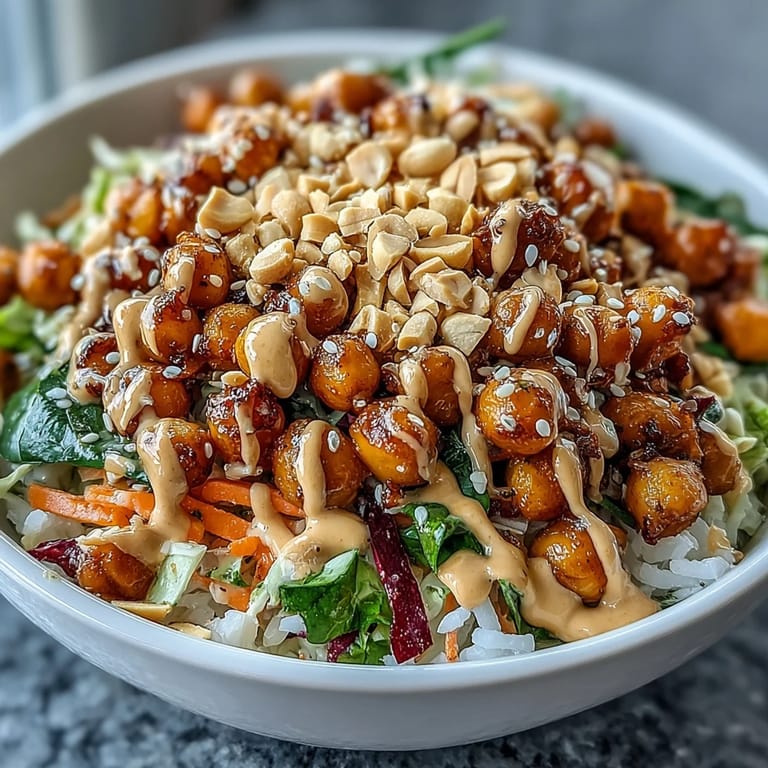
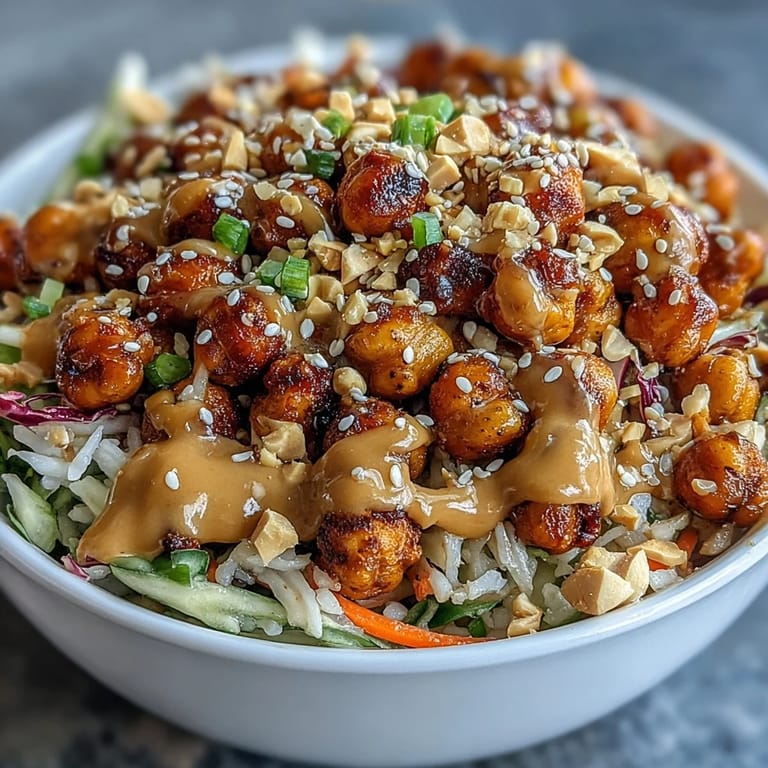
- Divide your grain among four bowls as the base—this is your foundation. Layer on the roasted chickpeas while they're still warm, then arrange the raw vegetables in sections around the bowl like you're creating something intentional, not just throwing things together.
- Finish with flavor and texture:
- Drizzle the peanut sauce generously over everything—don't be shy, this is where the magic lives. Top with chopped roasted peanuts and sesame seeds if you're using them, then serve immediately with lime wedges for squeezing.
 Save
Save There's something about a bowl where every element has its own flavor and texture but they somehow taste like they were made for each other. I've learned that's when food stops being just fuel and becomes something you're actually excited to sit down with.
Why This Bowl Works Every Single Time
The structure of this bowl is almost foolproof because it balances four different textures and temperatures simultaneously—you've got warm and crispy chickpeas, cool and crunchy vegetables, soft grains, and a silky sauce that pulls it all into one coherent idea. I've made this same bowl with completely different vegetables depending on what's in my fridge, and it works because the sauce and chickpeas are the real stars. That's the blueprint: get those two things right, and you can improvise the rest.
Customizing Without Losing the Soul
I've swapped brown rice for cauliflower rice when I was in a low-carb mood, added massive handfuls of baby spinach when I needed greens, and even used black chickpeas once because that's what I had. The sauce is flexible with its heat level too—I dial down the sriracha for people I'm feeding who prefer milder food, and nobody complains because the peanut butter and maple syrup are doing most of the talking. The point is, this bowl is forgiving as long as you keep the chickpeas crispy and the sauce creamy.
The Details That Actually Matter
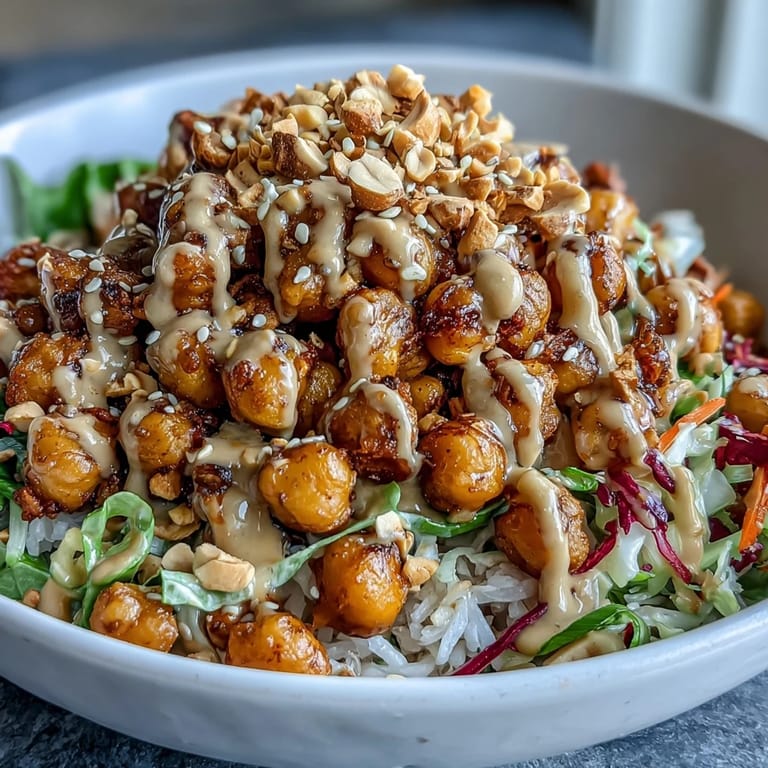
When I first made this, I used cold peanut butter straight from the jar and wondered why my sauce looked lumpy and sad. Warm water actually helps it blend and become that pourable, silky thing. The lime wedges are more important than they seem—a squeeze at the end brings everything into focus and prevents the bowl from tasting one-dimensional. And those roasted peanuts scattered on top aren't just decoration; they're the moment where something crunchy happens in your mouth.
- Keep your peanut sauce warm or at room temperature when you drizzle it so it actually clings to things instead of pooling at the bottom.
- Taste the sauce before you assemble bowls and adjust the salt, heat, or sweetness while you can still fix it easily.
- If you're making this for a crowd with different preferences, keep the sauce on the side and let people drizzle their own so nobody feels obligated to finish something too spicy or too mild.
 Save
Save This bowl taught me that vegetarian eating doesn't have to feel like you're missing something—it just means you need to be thoughtful about where your protein and satisfaction come from. Make this once and you'll understand why I keep coming back to it.
Recipe FAQs
- → Can I make this bowl ahead of time?
Absolutely. You can roast the chickpeas, prepare the peanut sauce, and chop vegetables up to 3 days in advance. Store components separately in airtight containers and assemble when ready to serve. The sauce may thicken in the refrigerator—simply whisk in a little warm water to reach desired consistency.
- → What can I substitute for peanut butter?
Try almond butter, cashew butter, or sunflower seed butter for a nut-free alternative. Tahini also works wonderfully, though it will yield a slightly different flavor profile. Adjust the sweetener accordingly, as some alternatives may be less sweet than peanut butter.
- → How do I store leftovers?
Keep assembled bowls refrigerated for up to 2 days, though the vegetables may lose some crispness. For best results, store components separately and combine fresh. The roasted chickpeas maintain their crunch for 3-4 days when kept in a sealed container at room temperature.
- → Can I use canned chickpeas without roasting?
You can, but roasting transforms their texture from soft to irresistibly crunchy while concentrating flavors. If you're short on time, simply season the drained chickpeas and add them directly—the dish will still be delicious, just with a different texture profile.
- → Is this bowl gluten-free?
Yes, with one simple swap: replace the soy sauce in the peanut sauce with tamari or coconut aminos. Double-check that your other ingredients, particularly spices and condiments, are certified gluten-free if you have strict dietary requirements.