 Save
Save The smell of roasted eggplant filled my kitchen one Sunday morning when I decided to stop buying those tiny dip containers at the store. I had invited friends over without a real plan, just a vague idea about Mediterranean flavors and a cutting board I'd never fully used. What started as panic turned into the most relaxed brunch I've ever hosted, because everyone just grazed and talked while I kept adding little piles of vegetables and nuts. The board never looked perfect, but nobody cared. That's when I learned that the best meals don't need plating rules.
I made this board the morning my sister announced she was moving across the country. We sat around it for three hours, piecing together bites of feta with olives, dunking flatbread into every dip, and pretending we weren't both a little sad. The platter outlasted two pots of coffee and became the backdrop for all the small talk we needed before the big goodbye. Food like this doesn't rush you, and that day, I needed it to linger.
Ingredients
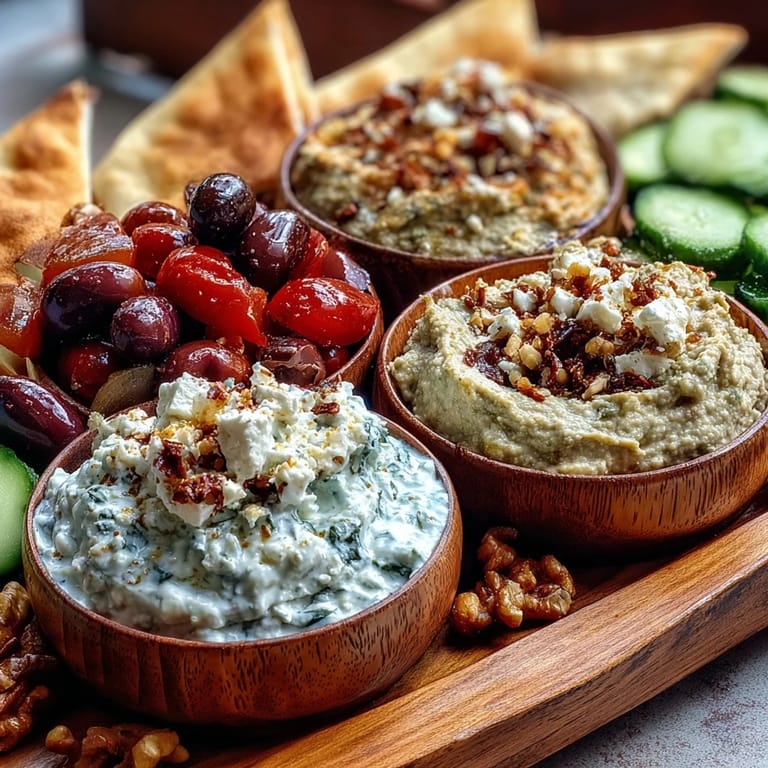
- Hummus: Whether you make it or buy it, look for one that's creamy enough to swipe easily with bread but thick enough to hold a drizzle of olive oil on top.
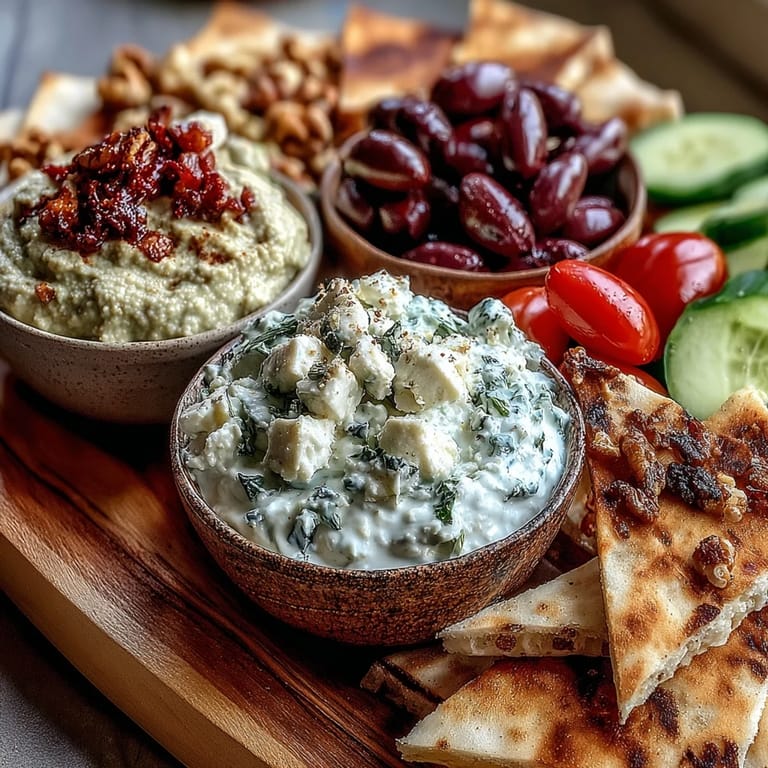
- Tzatziki sauce: The key is squeezing every drop of water out of the grated cucumber, or you'll end up with a puddle instead of a dip.
- Baba ganoush: Roasting the eggplant until the skin blackens gives it that smoky depth you can't fake with shortcuts.
- Roasted red pepper dip: This one adds a pop of sweetness that balances the tang of the other dips.
- Cucumber: Slice it thick enough to scoop dip without snapping in half.
- Cherry tomatoes: Halve them so they sit flat and don't roll off the board.
- Bell pepper: Any color works, but red and yellow make the platter look more vibrant.
- Assorted olives: Mix briny kalamata with buttery green ones for contrast.
- Feta cheese: Crumble it yourself from a block rather than buying pre-crumbled, it tastes sharper and doesn't have that dusty coating.
- Mixed nuts: Toast them lightly in a dry pan for a minute to wake up their flavor.
- Pita breads and flatbreads: Warm them briefly in the oven so they're soft and pliable, not cardboard.
- Olive oil: Use your good bottle here, it's one of the few places people actually notice the difference.
- Fresh herbs: Oregano and parsley add color and a burst of fragrance when you tear them with your hands instead of chopping.
Tired of Takeout? 🥡
Get 10 meals you can make faster than delivery arrives. Seriously.
One email. No spam. Unsubscribe anytime.
Instructions
- Make the hummus:
- Toss the chickpeas, tahini, lemon juice, garlic, and salt into a food processor and let it run until the mixture looks almost fluffy. If it's too thick, drizzle in water a tablespoon at a time until it loosens into a silky swirl.
- Whip up the tzatziki:
- Grate the cucumber, then wrap it in a clean kitchen towel and twist hard to wring out the liquid. Mix the dry cucumber with yogurt, garlic, dill, olive oil, and salt, then chill it for at least an hour so the flavors settle into each other.
- Roast and blend the baba ganoush:
- Pierce the eggplant with a fork, then roast it whole until the skin wrinkles and the inside collapses into soft flesh. Scoop out the insides and blend with tahini, olive oil, lemon juice, and salt until it's creamy with just a little texture left.
- Portion the dips:
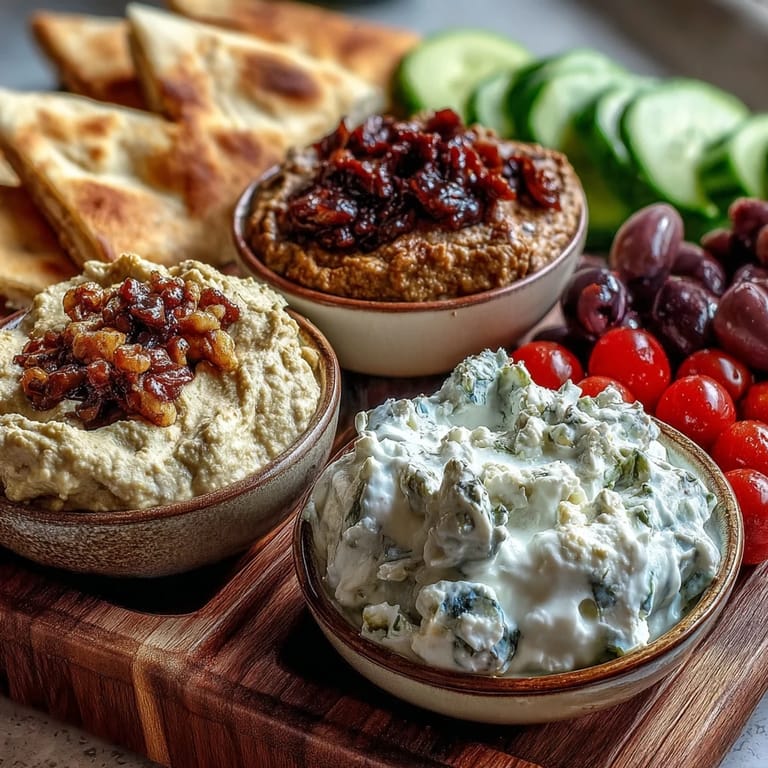
- Spoon each dip into its own small bowl or ramekin so they don't bleed into each other on the board.
- Start building the board:
- Set the dip bowls on your platter first, spacing them out so there's room to fill in around them.
- Add the fresh vegetables:
- Tuck cucumber rounds, tomato halves, and pepper strips into the gaps, clustering them by color if you want it to look intentional.
- Scatter the olives and feta:
- Drop little piles of olives and crumbled feta in the remaining spaces, letting them tumble naturally instead of arranging them in rows.
- Fill in with nuts:
- Pour mixed nuts into any empty corners to add height and crunch.
- Arrange the breads:
- Tuck pita and flatbread pieces around the edges or stack them loosely so guests can grab them easily.
- Finish with oil and herbs:
- Drizzle olive oil over the dips and scatter torn herbs across the whole board for a fresh, just-made look.
- Serve and let people explore:
- Set it out and step back. The best part is watching people create their own combinations without any guidance.
 Save
Save One morning my neighbor wandered over while I was assembling this board and ended up staying for two hours. She kept saying she'd just try one more bite, then another, and we talked about everything except the reason she'd knocked on my door. Later she told me it was the first time she'd felt hungry in weeks. I don't think it was the food exactly, just the ease of it, the way you could keep your hands busy and your guard down at the same time.
Making It Your Own
I've learned that this board is more of a template than a recipe. Some weeks I add marinated artichokes or sun-dried tomatoes when I find them at the market. Other times I skip the nuts if someone's allergic or swap in vegan cheese when my friend who can't do dairy comes over. The base stays the same, but the little additions make it feel new every time, like a conversation that shifts depending on who's in the room.
Timing and Prep
I almost always make the dips the night before, especially the tzatziki, which tastes better after the garlic has a chance to mellow in the fridge. The morning of, I just slice the vegetables, warm the bread, and arrange everything while the coffee's brewing. It's the kind of recipe that rewards a little advance work but doesn't punish you if you're scrambling at the last minute.
Serving and Storing
This board is best served right after you assemble it, while the bread is still warm and the vegetables are crisp. If you have leftovers, store the dips separately in airtight containers and they'll keep for three or four days. The vegetables lose their snap after a few hours, so I usually just snack on those while I'm cleaning up.
- Add a sprinkle of cumin or smoked paprika to any dip for a deeper, warmer flavor.
- If you're making this for a bigger crowd, double the dips but keep the vegetable quantities the same.
- Pair it with a crisp white wine or sparkling water with a twist of lemon to keep things light.
 Save
Save This platter has become my answer to almost every casual gathering, the one I reach for when I want people to feel welcome without making it look like I tried too hard. It's generous without being fussy, and it always starts conversations.
Recipe FAQs
- → How far in advance can I prepare the components?
The dips actually benefit from being made ahead—hummus, baba ganoush, and tzatziki can all be prepared 1-2 days in advance and stored in airtight containers. The vegetables can be sliced a few hours before serving, but wait to cut the flatbreads until the last hour so they stay fresh.
- → What can I substitute for the flatbreads?
Try crusty baguette slices, crackers, or even vegetable crudités like carrot sticks and radish slices. For a gluten-free option, use rice crackers or gluten-free flatbreads. You could also serve with warm pita chips made by brushing pita with olive oil and toasting until crispy.
- → How do I make this board vegan?
Simply omit the feta cheese or replace it with a plant-based feta alternative. The tzatziki will need a dairy-free yogurt substitute—coconut yogurt or almond-based yogurt work well. Double-check that your store-bought hummus and bread don't contain honey or other animal products.
- → What else can I add to customize the board?
Consider adding marinated artichokes, sun-dried tomatoes, roasted grapes or figs, dolmas (stuffed grape leaves), or hard-boiled eggs. Fresh fruit like grapes or figs pairs beautifully with the salty cheeses and dips. You could also include grilled vegetables like zucchini or eggplant slices.
- → What beverages pair well with this Mediterranean board?
Crisp white wines like Sauvignon Blanc or Pinot Grigio complement the fresh vegetables and creamy dips. For something non-alcoholic, try sparkling water with lemon or an iced mint tea. A light rosé also works beautifully with the Mediterranean flavors and sunny presentation.
- → How do I store leftovers?
Store each dip separately in airtight containers in the refrigerator for up to 5 days. The vegetables are best used within 2-3 days but may lose some crispness. Flatbreads should be kept in a sealed bag at room temperature for 2-3 days or frozen for longer storage. Avoid assembling the board until you're ready to serve.