 Save
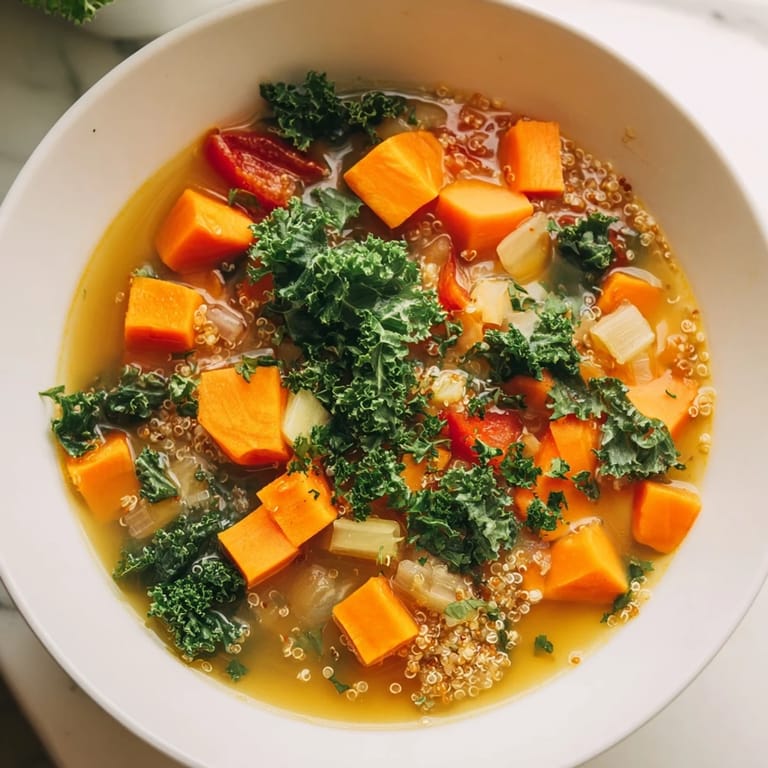
Save There was a Tuesday morning when my kitchen felt too quiet, and the weather outside had turned that particular shade of gray that makes you want something warm in your hands. I opened my pantry and found a half-empty box of quinoa pushed to the back, and suddenly I remembered why I'd bought it months ago—a friend had mentioned how it cooks into something almost creamy in broth. That same week, my vegetable drawer was overflowing with carrots, celery, and a bunch of kale that needed rescuing. By midday, this soup was simmering, filling the apartment with a smell that felt like home.
I made this for my sister on a day when she'd been dealing with a cold, and watching her take that first spoonful—how her shoulders relaxed, how she asked for seconds—reminded me that the best meals are the ones that feel like someone's looking out for you. We sat at the kitchen table for longer than we usually do, just talking, while the soup steamed between us.
Ingredients
- Olive oil: Start with just enough to coat the pot; it's your foundation for building flavor without heaviness.
- Onion and garlic: These two are your aromatics, and taking time to let them become fragrant is where the soup's soul begins.
- Carrots, celery, and parsnip: The parsnip is the secret—it brings a subtle sweetness that balances the earthiness of everything else.
- Sweet potato: Adds creaminess as it softens, making the broth feel luxurious without any cream.
- Kale or Swiss chard: Choose whichever your market has looking freshest; remove the tough stems to keep the texture tender.
- Cabbage: Often overlooked, but it adds substance and a gentle sweetness that rounds out the soup's flavor.
- Tomatoes: Whether canned or fresh, they bring acidity that brightens everything else.
- Quinoa: Rinse it thoroughly before using—this small step prevents any bitter, soapy taste.
- Vegetable broth: Low-sodium gives you control over the final saltiness; taste as you go.
- Thyme, oregano, and bay leaf: These herbs are gentle enough not to overpower the vegetables, but present enough to tie everything together.
- Lemon juice: The optional squeeze at the end is actually essential; it wakes up all the flavors you've built.
- Fresh parsley: A small garnish that makes the soup taste fresher than it has any right to.
Tired of Takeout? 🥡
Get 10 meals you can make faster than delivery arrives. Seriously.
One email. No spam. Unsubscribe anytime.
Instructions
- Start with flavor:
- Heat the oil in your largest pot over medium heat, then add the onion and garlic. You'll know it's ready when the kitchen smells alive and the onion starts turning translucent—usually 2 to 3 minutes. This is the moment you're building your foundation.
- Build your base:
- Add the carrots, celery, parsnip, and sweet potato, stirring occasionally as they soften. After 5 to 6 minutes, you'll notice the kitchen smells even better, and the vegetables start to surrender their edges. This is exactly where you want to be.
- Add the greens:
- Toss in the kale, cabbage, and tomatoes, stirring gently for about 2 minutes. The pot suddenly looks fuller and more vibrant, and the tomatoes begin releasing their bright acidity into the oil.
- Bring it together:
- Pour in the rinsed quinoa, broth, and all your seasonings. Bring everything to a boil, watching as the pot transforms from a jumble of vegetables into something that actually looks like soup. Add the bay leaf and let it float on top like a little compass.
- Let time do the work:
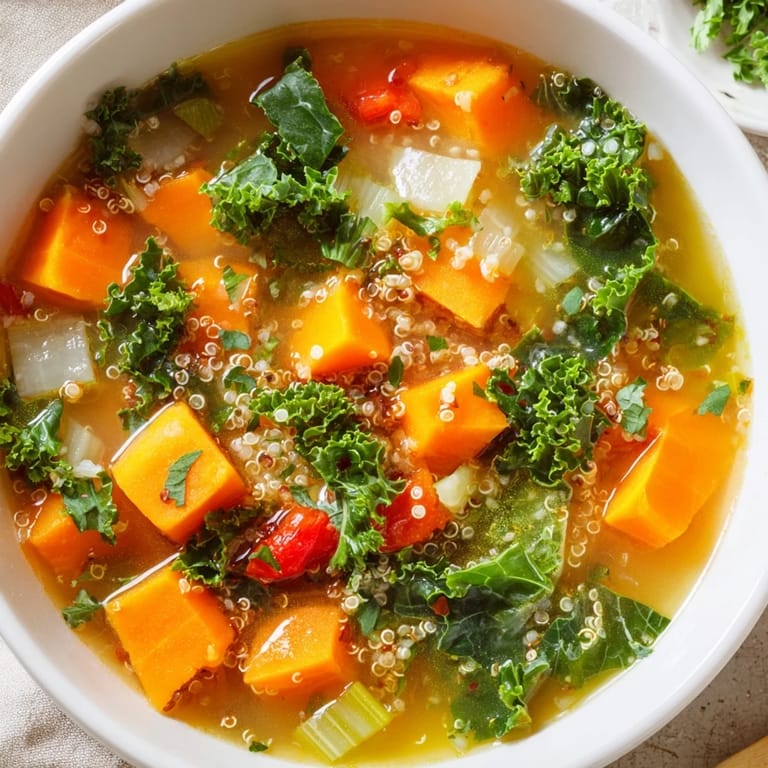
- Reduce the heat to low, cover the pot, and simmer for 25 to 30 minutes. You can walk away during this time, but check in once—the vegetables should be tender enough to break with a spoon, and the quinoa should have absorbed enough broth to be soft and yielding.
- Finish with brightness:
- Fish out the bay leaf, then stir in the fresh parsley and lemon juice if you're using it. Taste, adjust your salt and pepper, and suddenly you'll realize why this soup felt worth making in the first place.
 Save
Save This soup has a way of becoming part of your rhythm when the seasons shift. I've made it on countless dark afternoons, and each time someone's come into the kitchen asking what smells so good, already reaching for a bowl before the question is even finished. It's food that nourishes, but it's also food that invites people to slow down.
When to Make This Soup
Winter is the obvious answer, but I've found this soup works just as well in autumn when the vegetables are at their peak, or even in spring if you're craving something grounding. It's one of those recipes that adapts to what your market has and what your body needs at any given moment. The beauty is that it never feels out of season.
Building Flavor as You Go
One of the lessons this soup teaches is that taste as you cook isn't just permission—it's essential. The herbs are gentle, the vegetables speak for themselves, and the salt brings everything into focus, but only you know how much you need. I've learned to add salt in stages, tasting between additions, so the final bowl never surprises me with oversalting or underseasoning. It's also where the lemon becomes crucial; that brightness isn't optional, it's the final note that makes people ask for the recipe.
Variations and Additions
This soup is honestly more suggestion than rule, and that's where its real gift lives. Add chickpeas or white beans if you want more protein, swap the greens for spinach if kale isn't in your house, or throw in a pinch of red pepper flakes if you like heat. I've made it with butternut squash, added fennel, even stirred in a handful of fresh herbs from a friend's garden. The structure stays the same, but the soup becomes yours.
- For heartiness, serve with thick slices of crusty whole-grain bread that can soak up the broth.
- Keep it in the refrigerator for up to four days, and it actually tastes better as the flavors settle and marry together.
- It freezes beautifully too, though I'd leave out the fresh parsley and add it fresh when you reheat.
 Save
Save This soup lives in that quiet space where cooking becomes less about following instructions and more about listening to what you're making. It's one worth coming back to, season after season.
Recipe FAQs
- → Can I use other grains instead of quinoa?
Yes, you can substitute quinoa with grains like barley or rice, though cooking times may vary slightly.
- → How do I make the soup spicier?
Add a pinch of red pepper flakes during the initial sauté of onions and garlic to introduce a mild heat.
- → Is it possible to add more protein?
Adding drained chickpeas or white beans boosts protein content and adds texture without overpowering flavors.
- → Can I swap kale for other greens?
Spinach or Swiss chard are great alternatives that will maintain the soup's nutritious profile and color.
- → How should leftovers be stored?
Store cooled soup in an airtight container in the refrigerator for up to four days or freeze for longer preservation.