 Save
Save Sunday afternoons used to mean chaos in my kitchen—five containers, five different meals, the kind of meal prep that left me exhausted before the week even started. Then I stumbled onto this bowl concept during a farmers market haul when I'd bought way too many vegetables and felt genuinely stuck. It hit me that layering everything together, grain to legume to greens, could transform Sunday cooking from a chore into something almost meditative, and honestly, the results tasted better by Wednesday than they did on day one.
I brought five of these bowls to a friend's potluck once, just testing the concept, and watched people come back for seconds even though there was a spread of other dishes. Someone asked for the recipe right then and there, container in hand, and I realized this wasn't just convenient—it was actually craveable food, not just fuel.
Ingredients
- Quinoa (2 1/2 cups cooked, about 1 cup dry): This grain holds its texture beautifully over five days and brings a subtle nutty flavor that doesn't fade.
- Sweet potato (2 cups, peeled and diced): The sweetness becomes more pronounced by day three, so don't skip roasting—it's what makes these bowls craveable.
- Broccoli florets (2 cups): Roasting creates a crispy edge that stays satisfying even when soft, and it actually tastes better cold.
- Red bell pepper (1, chopped): Adds brightness and stays crisp in the container when you keep it separate from dressing.
- Olive oil (2 tbsp): Use a good quality oil for roasting since this is where most of the flavor comes from.
- Sea salt and black pepper (1/2 tsp and 1/4 tsp): Season your roasted vegetables generously—this is where most people skimp and regret it.
- Cherry tomatoes (1 cup, halved): Pack these separately or add them last; they weep liquid and will soften everything if given the chance.
- Cucumber (1 cup, diced): The crunch factor that keeps the bowl from feeling too soft after a few days.
- Baby spinach or kale (1 cup, chopped): Kale holds up better through the week, but spinach has a milder flavor if you're still warming up to greens.
- Red onion (1/4 cup, thinly sliced): A small amount brings real punch—pickle them in a tiny jar with vinegar for even more zing.
- Black beans (1 1/2 cups cooked): Canned is fine; just rinse thoroughly to remove excess sodium and that metallic taste.
- Chickpeas (1 1/2 cups cooked): These add protein and stay perfectly firm through day five.
- Roasted almonds (1/4 cup, chopped): Toast your own if you want them fresher, but quality store-bought work just fine.
- Pumpkin seeds (2 tbsp): These add minerality and a subtle earthiness that pairs beautifully with tahini dressing.
- Sunflower seeds (2 tbsp): Another layer of nuttiness that keeps the bowl interesting on day four when you're tired of eating.
- Tahini (1/4 cup): The backbone of the dressing—get the smooth kind, not the oily separated stuff.
- Lemon juice (2 tbsp): Fresh squeezed makes a real difference; bottled tastes thin by comparison.
- Water (2 tbsp): Added gradually to reach the right consistency; too thick and it won't coat everything evenly.
- Maple syrup or honey (1 tbsp): Just enough to balance the tahini's earthiness without making it dessert-like.
- Garlic (1 clove, minced): One clove is plenty—the flavor concentrates as the dressing sits.
- Cumin (1/4 tsp): A whisper of warmth that ties all the roasted vegetables together.
- Salt and pepper (to taste): Taste the dressing twice before declaring it done.
Tired of Takeout? 🥡
Get 10 meals you can make faster than delivery arrives. Seriously.
One email. No spam. Unsubscribe anytime.
Instructions
- Heat your oven and prep:
- Get the oven to 425°F and line a baking sheet with parchment paper. This temperature is hot enough to caramelize the vegetables' edges without turning them to mush.
- Season and roast the vegetables:
- Toss your sweet potato, broccoli, and bell pepper together with olive oil, salt, and pepper in a bowl, then spread them in a single layer. You'll hear them sizzle when they hit the hot pan—that's the sound of flavor building.
- Roast with intention:
- Let them go for 25 to 30 minutes, stirring halfway through so everything caramelizes evenly. The sweet potato pieces should be tender enough to pierce easily but still hold their shape. Set them aside to cool completely; warm vegetables will steam the quinoa if you layer too early.
- Prepare the grain:
- If your quinoa isn't already cooked, start it now according to package directions—it usually takes about 15 minutes and needs to cool before containers. The timing works perfectly if you start this while vegetables roast.
- Build the dressing:
- In a small bowl, whisk tahini with lemon juice, water, maple syrup, minced garlic, and cumin until it's smooth and creamy. Start with two tablespoons of water and add more by the teaspoon if needed; the texture should be pourable but thick enough to coat a spoon.
- Layer your containers:
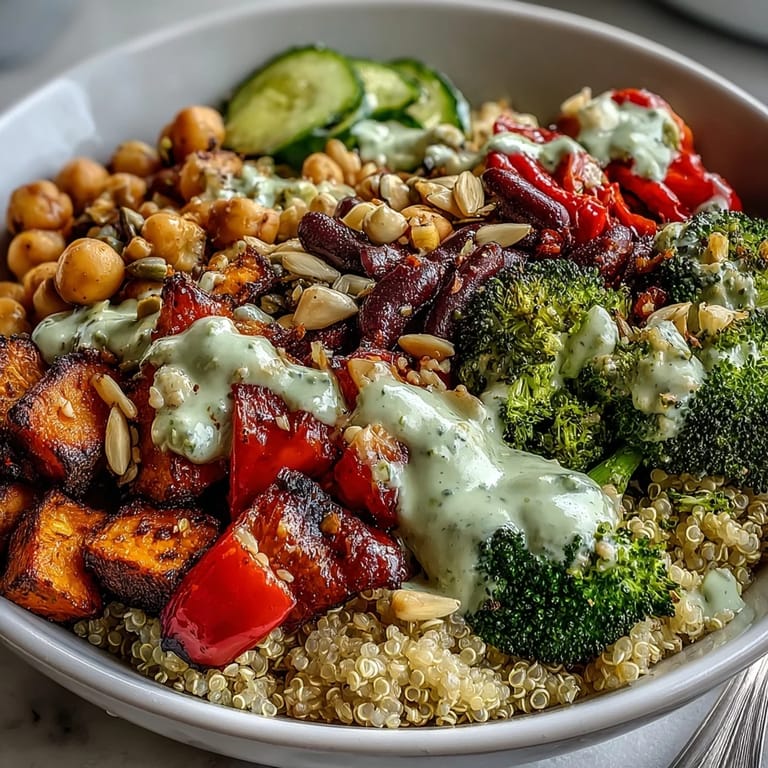
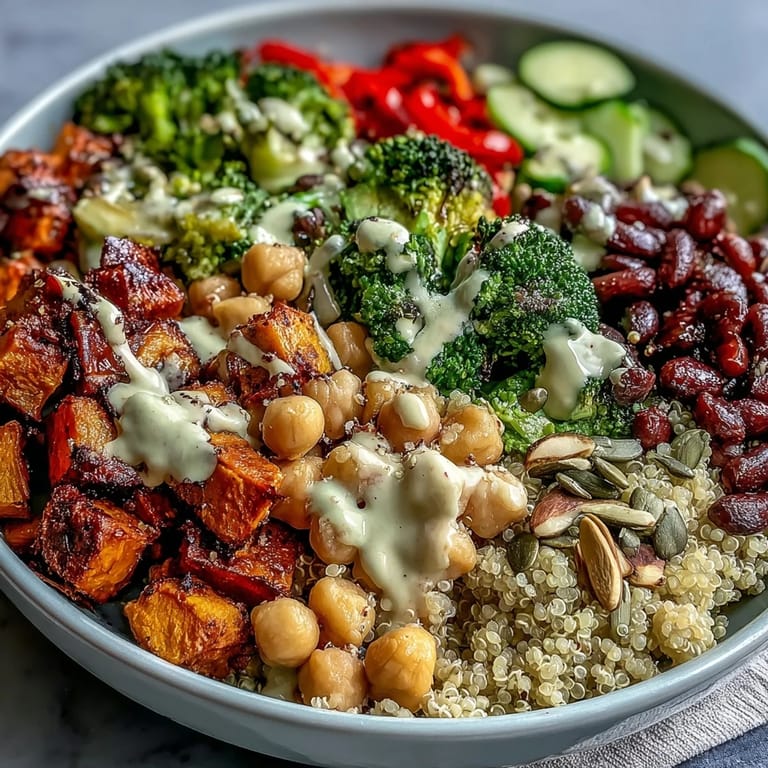
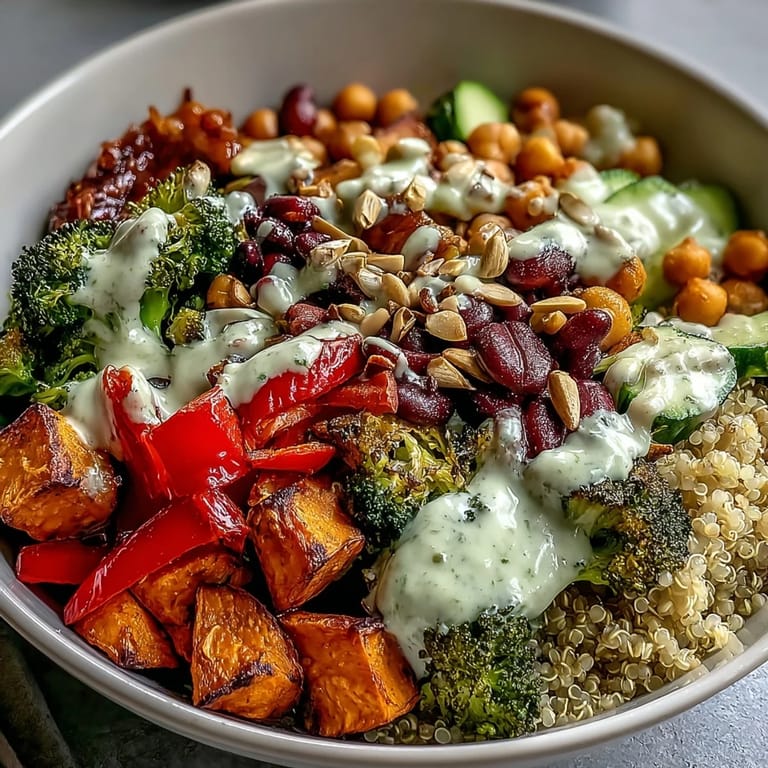
- This is where the magic happens—start with a base of quinoa, then add roasted vegetables, fresh vegetables, beans, and top with nuts and seeds. Think of it as building from hearty to delicate, so flavors mingle naturally as you eat through the week.
- Dress strategically:
- Either drizzle dressing over everything before storing if you like softer textures, or pack it separately in a small container if you want everything to stay crisp. I've found that dressing poured over the night before actually tastes better by lunch—the flavors marry while everything softens slightly.
 Save
Save There's something almost meditative about standing in front of five containers, knowing your lunches are handled for five days. A coworker once asked why I never looked stressed during our usual midweek food slump, and when I told her about these bowls, she started making them too. Now we compare variations on Mondays like we're trading secret recipes.
Variations That Keep Things Fresh
The beauty of this framework is that it adapts to whatever's in season or on sale. In fall, I'll roast cauliflower and butternut squash instead of sweet potato, or swap broccoli for Brussels sprouts if I'm feeling something with more bite. Winter calls for roasted beets and carrots, and spring is the moment I finally add fresh peas and asparagus. The structure stays the same—grain, roasted vegetables, fresh vegetables, legumes, nuts, dressing—but the actual flavors shift enough that eating the same bowl five days doesn't feel repetitive.
Storage Wisdom From Real Experience
These bowls genuinely improve through day three as flavors marry and textures soften into something cohesive. By day four, the dressing will have soaked into everything, creating almost a salad-grain hybrid that's oddly more satisfying than day one. The key is understanding that you're not eating the same meal five times; you're eating five variations on a theme as time changes the texture and intensity of each component.
Making This Work for Your Schedule
The actual active cooking time is maybe thirty minutes if you're moving efficiently, but the oven does most of the heavy lifting. I usually prep vegetables while the oven preheats, get the dressing whisked together while everything roasts, and do all the assembly while sipping coffee and listening to something I actually want to hear. It's the kind of hour that feels productive without feeling rushed, and you end up with lunches that make you happy.
- Chop vegetables the night before if you want to shave time off Sunday, but don't mix wet and dry ingredients until you assemble.
- The dressing can be made up to three days ahead and actually tastes better once the garlic has mellowed slightly.
- If you're batch cooking grains, make extra quinoa or rice and use it for other meals throughout the week.
 Save
Save These bowls have genuinely changed how I approach the week, turning Sunday from a frantic scramble into something I actually look forward to. Once you nail the basic formula, you'll find yourself tweaking it based on what's calling to you, making it uniquely yours.
Recipe FAQs
- → How long do these power bowls stay fresh?
These bowls keep well refrigerated for up to 5 days when stored in airtight containers. For best results, store the tahini dressing separately and drizzle over just before eating. The roasted vegetables and cooked quinoa maintain their texture beautifully throughout the week.
- → Can I customize the vegetables?
Absolutely. Swap seasonal favorites like zucchini, carrots, cauliflower, or Brussels sprouts for the roasted vegetables. Fresh options like shredded cabbage, radishes, or bell peppers work wonderfully in the raw vegetable layer. Adjust based on what's available and what you enjoy.
- → What grain alternatives work instead of quinoa?
Brown rice, farro, bulgur wheat, or even cauliflower rice make excellent substitutes. Just adjust cooking time according to package directions. Each grain brings slightly different texture and nutritional benefits while still creating a satisfying base.
- → Is this bowl gluten-free and vegan?
Yes, as written these bowls are naturally gluten-free and vegan. Use maple syrup instead of honey in the dressing. Always check labels on packaged ingredients like beans to ensure no cross-contamination if you have severe gluten sensitivity.
- → How can I add more protein?
Increase portions of black beans and chickpeas, or add shredded chicken, hard-boiled eggs, or tofu. Extra nuts, hemp hearts, or a dollop of Greek yogurt also boost protein content while adding variety to texture and flavor.
- → Can the dressing be made spicy?
Certainly. Add sriracha, red pepper flakes, or minced fresh jalapeño to the tahini dressing. Start with small amounts and adjust to your preferred heat level. The creamy tahini base balances spice beautifully.