 Save
Save My colleague Marcus brought this to our office potluck on a rainy Thursday, and I watched the steam rise from his container as he stirred it together on the break room counter. The sauce had this magnetic glossy sheen, and within seconds, the whole floor smelled like toasted ginger and caramel. I asked for the recipe that same day, made it that weekend, and suddenly my weeknight dinners felt less like an obligation and more like something I actually wanted to cook.
The first time I cooked this for my partner, I burned the pork slightly while I was getting distracted by the vegetables, but somehow the caramelized edges actually made it better. We ate it straight from the wok at the kitchen counter because we couldn't be bothered to move, and that's when I realized this dish wasn't trying to impress anyone—it just wanted to feed you well.
Ingredients
- Pork tenderloin, thinly sliced (450 g): Tenderloin cooks fast and stays tender if you don't overcrowd the pan; slice it thin so it cooks through in just a few minutes without drying out.
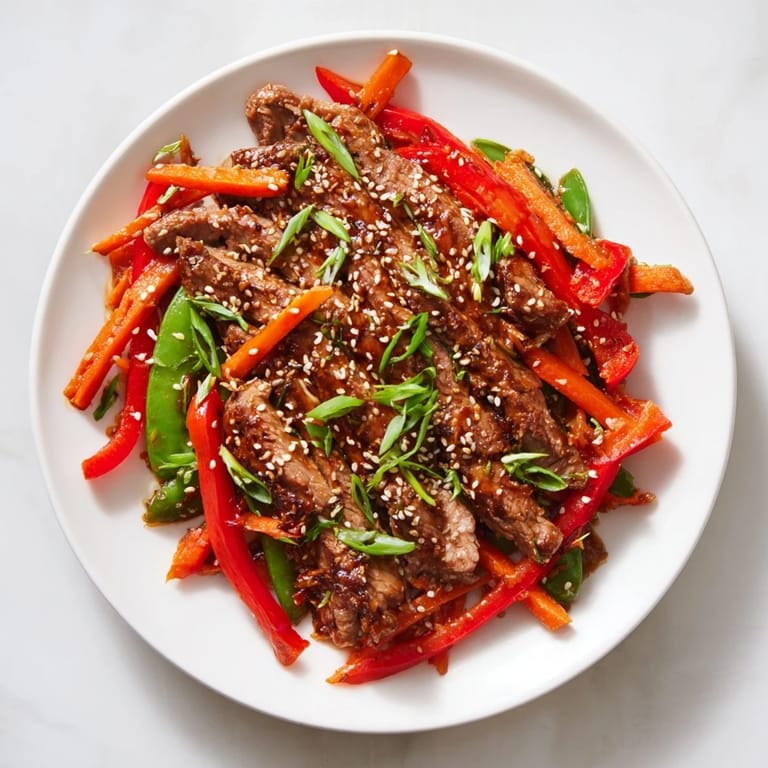
- Red bell pepper, sliced into strips: The sweetness balances the savory sauce beautifully, and the strips cook just enough to lose their raw edge while keeping their snap.
- Snap peas (1 cup): They're the textural hero here—trim the stem ends and they'll stay crisp and slightly sweet throughout cooking.
- Carrot, julienned: Thin julienne means it cooks at the same pace as the pepper and peas, giving you a balanced bite.
- Green onions, sliced: Split your portion—half goes in during cooking for flavor, the rest as garnish for brightness and a sharp onion bite.
- Garlic and ginger (2 cloves and 1 tsp): Fresh ginger is non-negotiable; it's what makes the sauce feel alive instead of just sweet.
- Low-sodium soy sauce (60 ml): The foundation of the sauce; low-sodium gives you control over the final saltiness.
- Mirin or sweet rice wine (60 ml): This is what makes the glaze glossy and gives the sauce its signature sweet-savory depth; don't skip it for something else.
- Brown sugar or honey (2 tbsp): The sweetness has to be balanced and subtle, not cloying—brown sugar gives you earthiness that honey doesn't.
- Rice vinegar (1 tbsp): The small acid hit cuts through the richness and keeps everything bright.
- Cornstarch (1 tbsp): Thickens the sauce into that glossy coating that clings to everything in the pan.
- Cold water (60 ml): Dissolves the cornstarch smoothly and gives the sauce room to work.
- Sesame oil (1 tsp): A little goes a long way; it's the whisper of toasted nut flavor that lingers in the back of your mouth.
- Vegetable oil (2 tbsp): High smoke point is essential; use something neutral that won't compete with the other flavors.
- Toasted sesame seeds and extra green onions (optional): These turn a good dinner into something that looks like you tried, even if you didn't.
Tired of Takeout? 🥡
Get 10 meals you can make faster than delivery arrives. Seriously.
One email. No spam. Unsubscribe anytime.
Instructions
- Make the sauce first:
- Whisk soy sauce, mirin, brown sugar, rice vinegar, cornstarch, cold water, and sesame oil together in a small bowl. The cornstarch will settle to the bottom, so give it one more quick stir right before you pour it in. Set it aside and let it sit while you prep everything else.
- Sear the pork:
- Heat a tablespoon of oil in a large wok or skillet over medium-high heat until it's just starting to smoke. You want the pan hot enough that the pork hits with a sizzle; that's your signal to add it. Cook for 3 to 4 minutes, stirring often, until the edges turn golden and the meat is cooked through but still tender, then transfer it to a clean plate.
- Cook the vegetables:
- Pour the remaining oil into the hot pan and let it shimmer. Add the bell pepper, snap peas, and carrot all at once, then stir constantly for 2 to 3 minutes until they soften just slightly but still have that crisp bite when you chew them. You're looking for the moment when they go from raw to cooked, not from cooked to mushy.
- Bloom the aromatics:
- Push the vegetables to the edges of the pan and add the garlic, ginger, and about half of the sliced green onions to the center. Stir everything for just 30 seconds until the smell hits you like a warm blanket—that's when you know they're releasing their flavor.
- Bring it all together:
- Return the pork to the pan, give the sauce one final stir to make sure the cornstarch is suspended, then pour it over everything in the wok. Toss constantly for 1 to 2 minutes while it bubbles and thickens into that glossy amber coat that clings to each piece of meat and vegetable. Stop the moment it reaches that consistency, or you risk overcooked pork.
- Finish and serve:
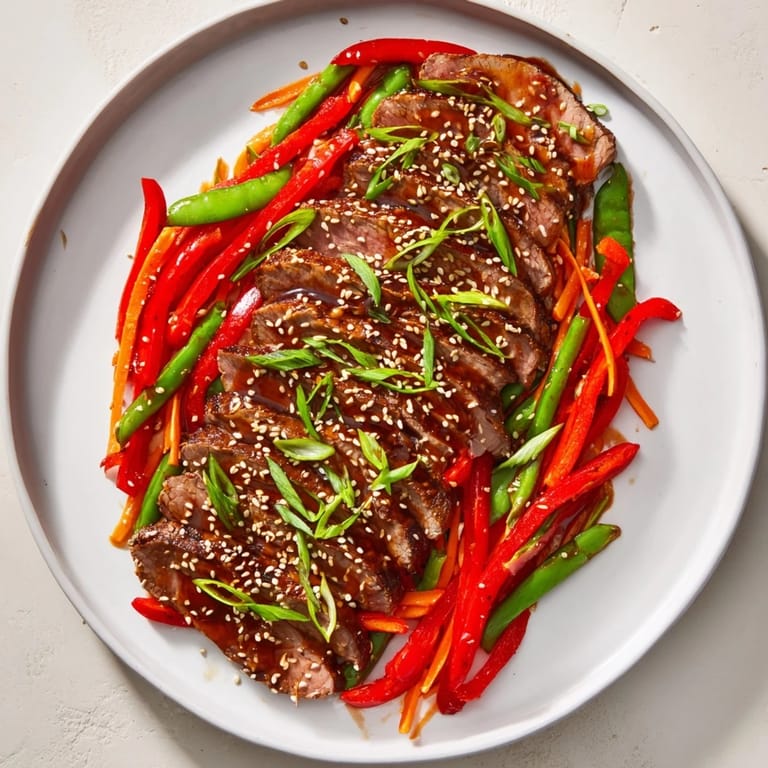
- Taste it right from the pan, because that's when it's best. Sprinkle the remaining green onions and sesame seeds over the top if you're using them, then get it onto plates or over rice or noodles while it's still steaming.
 Save
Save My mom watched me make this once and said it looked restaurant-quality, which made my whole week. There's something about the shine of that glaze and the aroma that lifts a simple Tuesday night into something that feels intentional and special.
Why the Wok Matters
A proper wok or large skillet with high sides changes everything. The sloped sides mean you can push ingredients up and away from the heat while you add something new, and the shape naturally keeps everything moving in the same direction. If you don't have a wok, a 12-inch skillet works fine, but you might need to cook in two batches to avoid crowding—crowded pan means steaming instead of searing, and you lose that caramelized crust on the pork.
Swaps and Variations That Actually Work
Chicken breast sliced thin cooks in about the same time as pork and absorbs the sauce beautifully. Tofu needs a gentler hand—press it first, cut it into chunks, and pan-fry it separately until the edges are crispy before tossing it with everything else. Beef tenderloin gives you a fancier version for when you want to impress someone, though it'll cook slightly faster than pork.
Building Your Own Vegetable Medley
The vegetables here are just a suggestion, not a mandate. Broccoli florets, sliced mushrooms, bok choy, and thin-sliced zucchini all work beautifully if you keep them roughly the same size so they cook evenly. Frozen vegetables are fine too if that's what you have, though they'll release more moisture so you might need to cook them a bit longer to get some caramelization. The only rule is to respect the heat level and your timing—everything needs to finish cooking at roughly the same moment.
- Cut vegetables roughly the same size so nothing cooks faster than anything else.
- Keep a splash of reserved teriyaki sauce nearby to add at the end if your dish seems too thick.
- Serve immediately over steamed rice, noodles, or even cauliflower rice if you're going low-carb.
 Save
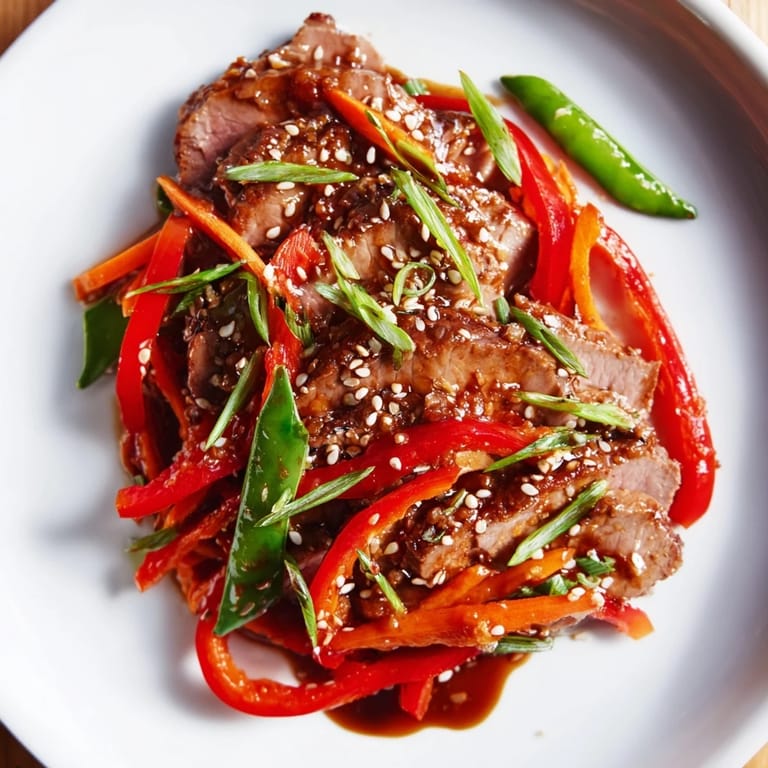
Save This dish exists in that perfect space where it feels homemade and intentional but doesn't demand hours of your time or a long list of things you've never heard of. Make it once and it becomes one of those recipes you return to again and again.
Recipe FAQs
- → What cut of pork works best for this dish?
Pork tenderloin or any lean, thinly sliced pork cut works well, cooking quickly and staying tender.
- → Can I substitute the vegetables?
Yes, broccoli, mushrooms, or bok choy can be used to vary the texture and flavor profile.
- → How do I make the sauce thicker?
The cornstarch slurry in the sauce thickens it when cooked; stirring continuously helps it glaze the ingredients evenly.
- → Is there a gluten-free alternative for soy sauce?
Tamari works as a gluten-free substitute without compromising the umami depth of the sauce.
- → How can I enhance the garnish?
Adding toasted sesame seeds and extra sliced green onions brings a flavorful and textural finish.
- → What cooking equipment is recommended?
A large wok or skillet ensures even heat distribution for quick stir-frying and optimal texture.