 Save
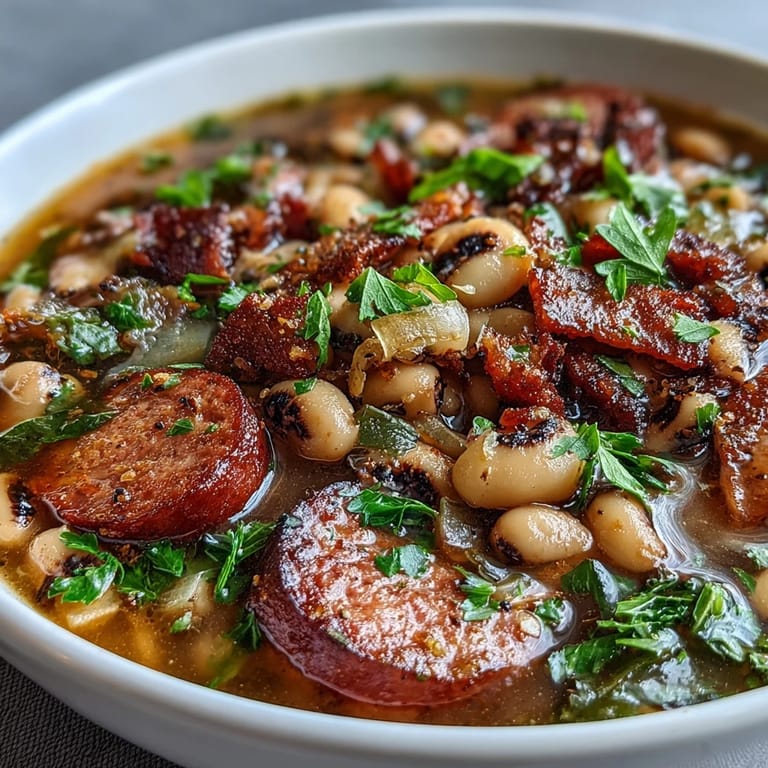
Save My grandmother used to say that black-eyed peas on New Year's Day weren't just tradition—they were insurance against hard times, a little edible luck you could actually taste. The first time I made her version, I got distracted mid-chop and nearly burned the bacon, but somehow that smoky accident became the soul of the whole pot. Now whenever I simmer these peas with sausage and that holy trinity of onion, bell pepper, and celery, the kitchen fills with this warm, savory haze that makes everyone stop what they're doing. It's comfort in a bowl, and honestly, it tastes like a promise kept.
I made this for my sister's potluck last January, right after New Year's, and watched people return to the pot three times. One guest swore off canned peas forever after tasting how creamy and tender these got—the slow simmer does something to the beans that a pressure cooker just can't replicate. That moment when someone closes their eyes while eating felt like the highest compliment I could get.
Ingredients
- Smoked sausage (225g/8 oz), sliced: Andouille brings authentic Creole heat, but kielbasa works beautifully too—don't skip browning it first, the caramelization adds depth.
- Thick-cut bacon (115g/4 oz), diced: Render it until crispy and your pot gets this smoky foundation that makes everything taste more intentional.
- Dried black-eyed peas (450g/1 lb), rinsed and sorted: Soaking overnight is worth the planning—it ensures even cooking and easier digestion.
- Large onion, diced: This isn't just filler; caramelized onions create a subtle sweetness that balances the spice.
- Green bell pepper, diced: Fresh and slightly sweet, it rounds out the vegetable base and adds color.
- Celery stalks (2), diced: This trio of vegetables is non-negotiable—together they build the aromatic backbone.
- Garlic cloves (3), minced: Add it after the softer vegetables so it doesn't burn and turn bitter on you.
- Low-sodium chicken broth (1.5 liters/6 cups): Low-sodium lets you control the salt and taste the peas, not the broth label.
- Water (240 ml/1 cup): Keeps the broth from overpowering and gives you room to adjust liquid as needed.
- Bay leaves (2): They quietly build a subtle herbal note—fish them out before serving or someone will find one.
- Smoked paprika (1 tsp): This is the secret weapon; it adds smokiness without bacon overdose.
- Dried thyme (1/2 tsp): Earthy and understated, it complements without shouting.
- Cayenne pepper (1/2 tsp, optional): Only if you want heat—respect your guests' tolerance.
- Freshly ground black pepper (1/2 tsp): Freshly ground makes all the difference; pre-ground tastes like dust by comparison.
- Kosher salt (3/4 tsp, plus more to taste): Kosher salt dissolves cleaner than table salt and you taste the food, not the mineral bite.
- Fresh parsley (2 tbsp), chopped: A bright, fresh finish that cuts through the richness and makes it feel lighter than it is.
- Hot sauce, to serve: Let people add their own—some want subtle comfort, others want fire.
Tired of Takeout? 🥡
Get 10 meals you can make faster than delivery arrives. Seriously.
One email. No spam. Unsubscribe anytime.
Instructions
- Prep the peas:
- Soak dried black-eyed peas overnight in plenty of cold water, or use the quick method: cover with boiling water and let them sit for an hour. Either way, drain and rinse well before cooking—this step prevents that bloated, split texture and helps them stay tender.
- Render the bacon:
- In your Dutch oven or heavy pot, cook the diced bacon over medium heat until it's properly crisp and the fat is golden. The rendered fat becomes your cooking base, so don't rush this or drain it all away—you want that smoky flavor clinging to the bottom of the pot.
- Brown the sausage:
- Add the sliced sausage to that bacon fat and let it sit for a moment before stirring, so it develops color and pulls all those caramelized bits from the surface. This takes about 5 minutes total—you're looking for a golden-brown crust, not gray and tired-looking meat.
- Build the base:
- Toss in your diced onion, bell pepper, and celery, stirring occasionally as they soften into each other—this usually takes 5 to 6 minutes. When they're translucent and the onion is starting to smell sweet, add your minced garlic and stir constantly for just one minute so it perfumes everything without burning.
- Combine and season:
- Stir in your drained black-eyed peas, chicken broth, water, bay leaves, smoked paprika, thyme, cayenne if using, black pepper, and salt. Return the cooked bacon and sausage to the pot and give everything a good stir—this is when it starts to feel like something real.
- The long simmer:
- Bring the whole pot to a boil, then immediately drop the heat to low, cover it, and let it bubble gently for 1 to 1.5 hours. The peas should be completely tender and creamy, and the broth should taste like it's been simmering for days even though it hasn't—that's the combination of smoked meat and slow cooking doing its thing.
- Taste and finish:
- Remove from heat, fish out the bay leaves, taste a spoonful, and adjust your salt and pepper—remember that hot sauce on the side will add more seasoning. Sprinkle fresh parsley over each serving like you mean it, and serve hot with extra hot sauce on the table.
 Save
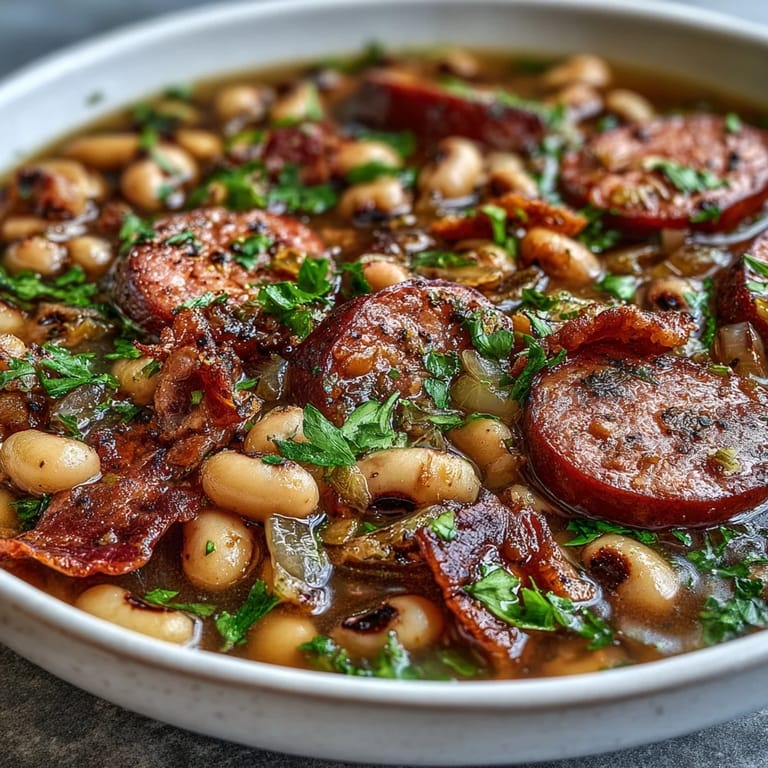
Save There's something about serving these peas that makes people slow down and actually taste what they're eating instead of rushing through dinner. My neighbor knocked on my door once because the smell drifting over the fence was making her hungry, and we ended up talking for an hour over bowls of this while it was still steaming. That's when I realized this wasn't just a New Year's tradition—it was an invitation to gather and be present together.
When to Make This
Obviously New Year's Day is tradition, but honestly, there's no bad time to make black-eyed peas. Winter feels right because the long simmer heats your kitchen without exhausting you, and a February afternoon when you need comfort tastes just as intentional as January first. I've also made them in batches for the freezer, and they actually improve over a few days as the flavors marry and deepen—something about cold overnight storage and reheating makes them taste almost luxurious.
Serving Suggestions
These peas don't stand alone in the way some main dishes do—they want company and context. Cornbread is the obvious choice, something buttery that you can use to soak up every last drop of broth, but sautéed collard greens or fresh-dressed coleslaw adds a bright counterpoint to all that richness. Over steamed white rice is traditional and keeps the meal grounded, though I've also served it in bowls with just a dollop of sour cream and fresh scallions on top, and that felt elegant in an unexpectedly understated way. Hot sauce is non-negotiable on the table—let people find their own heat level.
- A crisp white wine or cold iced tea cuts through the smokiness and lets you taste each element separately.
- Make extra and freeze it in portions for tired weeknights when you need something that tastes like it took hours but actually just needed reheating.
- Leftover peas transform into a grain bowl situation with roasted vegetables and fresh herbs if you want to reinvent them.
Variations Worth Trying
The vegetarian version isn't a consolation prize—it's honestly a different dish worth exploring. Use vegetable broth instead, skip the meat entirely, and double down on the smoked paprika or add a teaspoon of liquid smoke to create that depth you'd normally get from sausage and bacon. Some cooks swear by adding diced tomatoes or a splash of tomato paste for brightness, and collard greens stirred in at the last minute make it feel more substantial and Southern. I've even seen people add diced jalapeño or pickled vegetables for a Creole twist that feels less like tradition and more like personal taste taking over.
 Save
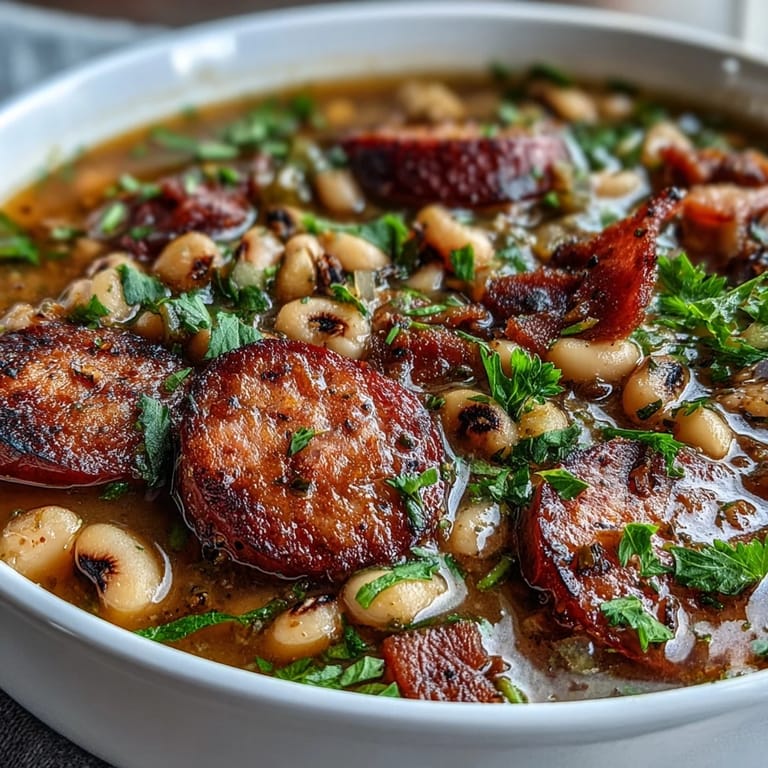
Save Black-eyed peas remind me that the best food is the kind that brings people together without fuss or apology. Make this when you need comfort, tradition, or just a reason to gather someone around your table.
Recipe FAQs
- → Do I need to soak the black-eyed peas before cooking?
Yes, dried black-eyed peas require overnight soaking for even cooking and best texture. For a quicker method, cover with boiling water and let stand for one hour before draining and proceeding with the dish.
- → Can I make this vegetarian?
Absolutely. Omit the bacon and sausage, then use vegetable broth instead of chicken broth. Add extra smoked paprika or a few drops of liquid smoke to maintain that depth of flavor traditionally provided by the meat.
- → What's the significance of eating black-eyed peas on New Year's Day?
In Southern tradition, black-eyed peas symbolize luck and prosperity for the coming year. When paired with greens (representing money) and cornbread (representing gold), they form a complete New Year's meal meant to invite fortune.
- → How long do leftovers keep in the refrigerator?
Cooked black-eyed peas store well in an airtight container for 4 to 5 days. The flavors often deepen and improve after a day or two, making this an excellent dish for meal prep or making ahead for gatherings.
- → Can I use canned black-eyed peas instead of dried?
You can substitute canned peas, though the texture will be softer. Use about 3 to 4 cans (drained and rinsed) and reduce the simmering time to 30 minutes, just enough to meld the flavors. The dish won't develop quite as rich a broth.
- → What should I serve with these black-eyed peas?
Steamed white rice is the classic accompaniment, allowing the flavorful broth to soak into the grains. Cornbread, collard or mustard greens, and a crisp white wine or sweet iced tea complete this traditional Southern meal.