 Save
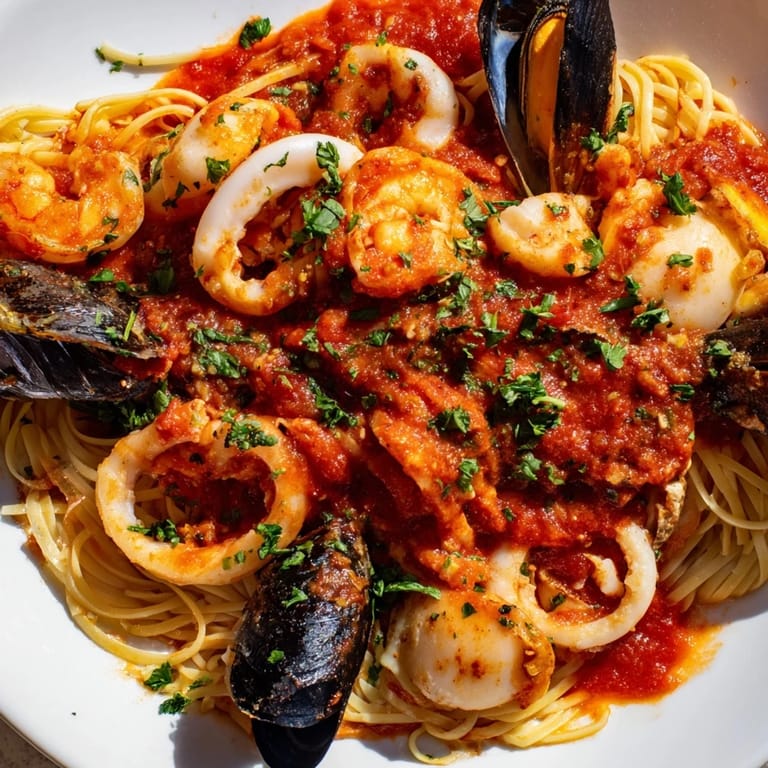
Save The first time I made seafood marinara, I was trying to impress someone special at a tiny dinner party, and I nearly panicked when the fishmonger handed me a pile of squid that still had an unsettling gloss to it. But once I got them home and started prepping, something clicked—the act of slicing those rings thin, the smell of garlic hitting hot oil, the way a proper marinara sauce comes alive when you let it breathe. This dish became my answer to the question: what do you make when you want to feel like you're cooking in a Roman trattoria, even if you're just in your own kitchen?
I remember making this for my mom on a random Thursday after she'd had a rough week, and watching her close her eyes after that first bite—not because it was perfect, but because for a moment, she was transported somewhere warm and salty and far away. That's when I understood this recipe isn't just about technique; it's about the generosity of feeding people something that feels like a small luxury.
Ingredients
- Large shrimp, peeled and deveined (200 g): Use the biggest ones your fishmonger has; they won't disappear into the sauce and stay plump when cooked just right.
- Mussels, cleaned and debearded (200 g): Buy them the day you cook, give them a quick rinse under cold water, and discard any that don't close when tapped—they're already gone.
- Squid rings (150 g): Slice them thin yourself if you can; pre-cut ones sometimes look sad and processed.
- Sea scallops (150 g): Pat them dry before cooking, and resist the urge to move them around constantly—they need a moment to develop a gentle sear.
- Spaghetti or linguine (350 g): Go for a good quality bronze-cut pasta if you can; it grabs the sauce better than the super smooth stuff.
- Olive oil (2 tbsp): This is your base, so use something you actually like tasting—not the fancy stuff, just honest oil.
- Onion, finely chopped (1 small): The sweetness balances the acidity of the tomatoes in ways you won't notice until it's missing.
- Garlic cloves, minced (3): Fresh garlic makes a difference here; jarred garlic will make you wonder why the dish feels flat.
- Red pepper flakes (1/2 tsp, optional): A whisper of heat wakes up all the other flavors without making anyone cough.
- Canned crushed tomatoes (800 g): Buy the San Marzano if your budget allows; the difference is real and worth it.
- Tomato paste (2 tbsp): This concentrates the tomato flavor and gives the sauce body—don't skip it or dilute it.
- Dry white wine (100 ml): Use something you'd drink; the cooking doesn't erase bad wine, it just concentrates it.
- Dried oregano and basil (1 tsp each): These are your Italian backbone—rub them between your palms before adding to release their oils.
- Sugar (1/2 tsp): Just enough to tame the tomato acidity without making the sauce taste sweet.
- Sea salt and black pepper: Taste as you go; seafood is forgiving, but it does need seasoning to shine.
- Fresh parsley, chopped (2 tbsp): Add this right before serving so it stays bright green and fragrant.
- Lemon wedges: For squeezing over the top—the acid cuts through the richness beautifully.
Tired of Takeout? 🥡
Get 10 meals you can make faster than delivery arrives. Seriously.
One email. No spam. Unsubscribe anytime.
Instructions
- Set your water to boil and prep everything:
- Fill a large pot with salted water and bring it to a rolling boil while you lay out all your ingredients—this is not the moment to be searching for garlic. Having everything ready means you can move quickly once the sauce starts building.
- Build your sauce foundation:
- Heat olive oil in a large, deep skillet over medium heat, then add your chopped onion and let it turn soft and translucent, about 2-3 minutes. You'll know it's ready when it smells sweet instead of raw and sharp.
- Wake up your aromatics:
- Stir in the minced garlic and red pepper flakes, cooking for just about a minute until the kitchen smells like an Italian grandmother's kitchen. Don't let it brown or it becomes bitter.
- Deglaze with wine:
- Pour in the white wine and let it bubble gently for 2 minutes, reducing slightly—this strips away the raw alcohol taste and adds a subtle sophistication.
- Build the sauce body:
- Add your crushed tomatoes, tomato paste, oregano, basil, sugar, salt, and pepper, stirring well to combine. Let this simmer uncovered for 10 minutes, stirring occasionally; the sauce will deepen in color and lose its raw tomato edge.
- Cook the pasta:
- While your sauce simmers, cook the pasta according to package directions until al dente—toss a piece against the wall if you're unsure, but actually just bite one. Reserve half a cup of pasta water before draining.
- Add the seafood thoughtfully:
- Start with the squid and scallops since they need the most time, letting them simmer for 2 minutes. Then add the shrimp and mussels, cover the skillet, and cook for 3-4 minutes until the shrimp turn pink and the mussels open—discard any mussels that stay stubbornly shut.
- Bring it all together:
- Gently toss the drained pasta into the sauce, using pasta water a splash at a time if the mixture feels too thick. The starch in the pasta water helps the sauce cling to every strand.
- Taste and serve:
- Take a spoonful, taste it, and adjust the seasoning one more time. Serve immediately while everything is still hot, garnished with fresh parsley and lemon wedges on the side.
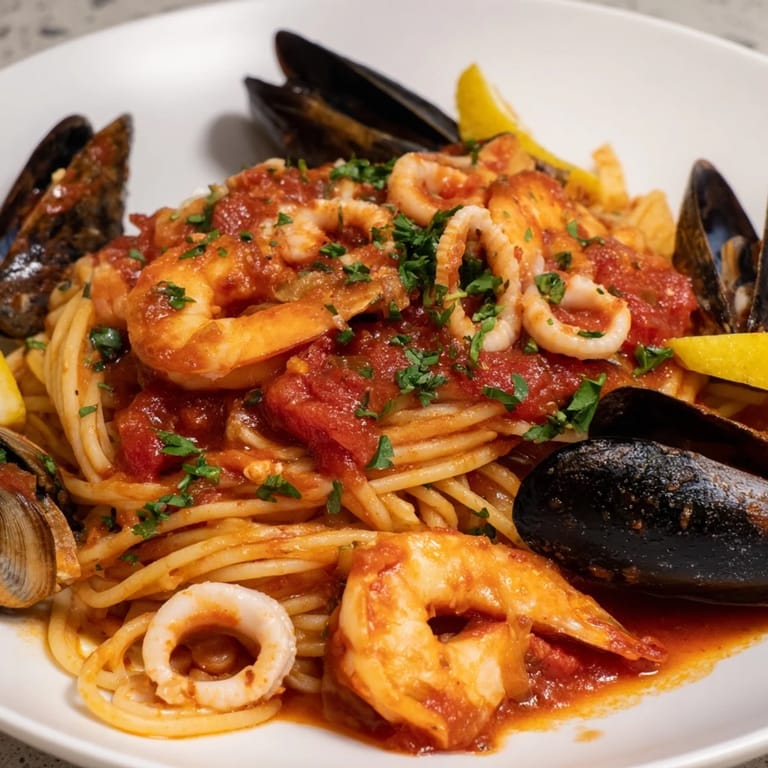 Save
Save There was a night when a friend told me this was the best meal anyone had made for her in years, and I realized the magic wasn't in the technique or the ingredients—it was in the care taken to get them right. That's what this dish taught me: simple things, done with attention, become memorable.
The Seafood Selection Secret
Buying seafood is partly about freshness and partly about developing a relationship with your fishmonger. Ask them what came in that morning, what they'd actually cook at home, and what's been sitting in the case since yesterday. They'll respect the questions and steer you right. The smell should be clean and oceanic, not fishy or ammonia-like—that's your first defense against something that will ruin the whole dish.
Why the Sauce Matters More Than You Think
A good marinara is about balance, not complexity—tomato, garlic, olive oil, and time. The wine adds brightness, the tomato paste adds depth, and the herbs add familiarity. Too many people oversalt their sauce or add cream because they're chasing something they can't name. What they're usually missing is either proper heat, enough salt, or just time to let flavors meld. This sauce comes together in 15 minutes, but it tastes like it simmered longer.
Timing and Temperature Control
The hardest part of this recipe is the restraint it requires—not turning up the heat to cook things faster, not stirring the seafood constantly because you're nervous. Medium heat is your friend here; it lets the sauce develop and the seafood cook gently. High heat gives you a rushed, stressed-tasting meal. Patience rewards you with tender shrimp, open mussels, and sauce that tastes like it was made with intention.
- Start timing the seafood the moment it hits the pan, and use a kitchen timer so you're not guessing.
- If your pasta is still cooking when the seafood is done, let the seafood wait in the warm sauce for a minute or two—it won't suffer.
- Fresh lemon at the table lets each person adjust the brightness to their taste without you overthinking it.
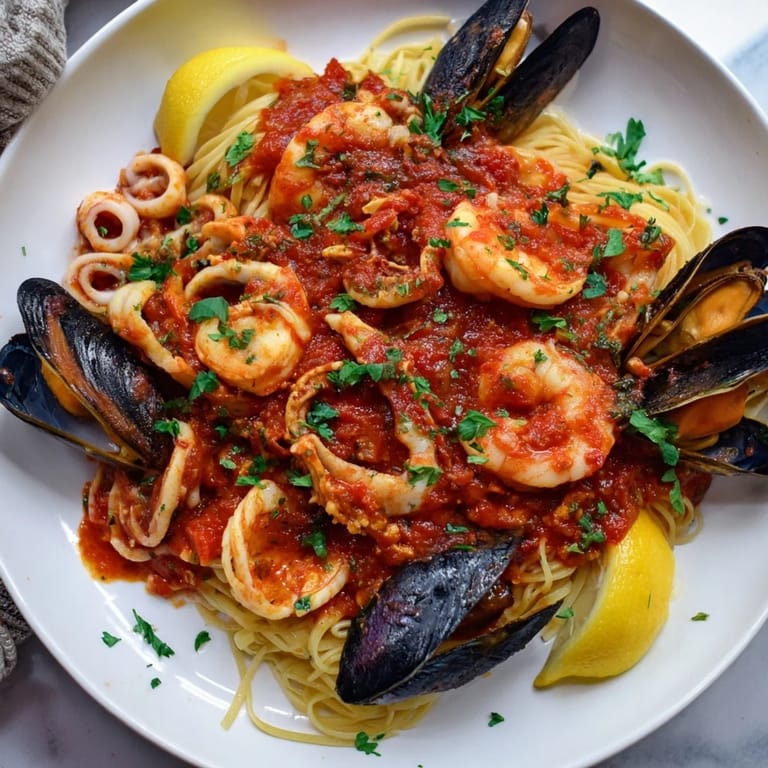 Save
Save This dish is proof that the most memorable meals don't need to be complicated—they just need to be made with care and served to people you want to feed well. Cook it for yourself on a quiet night, and you'll understand why it's been beloved for generations.
Recipe FAQs
- → What seafood is best for marinating in this dish?
Large shrimp, mussels, squid rings, and sea scallops create a balanced medley of textures and flavors perfect for this preparation.
- → How can I achieve a rich marinara sauce?
Simmer crushed tomatoes and tomato paste with garlic, onion, white wine, and herbs like oregano and basil for a deep, flavorful sauce.
- → What pasta works well with seafood and marinara?
Spaghetti or linguine are ideal as their shape complements the sauce and seafood pieces without overwhelming them.
- → Can I adjust the spiciness of this dish?
Yes; adding or omitting red pepper flakes allows control over heat levels to suit your preference.
- → How should I cook the seafood to avoid toughness?
Simmer delicate seafood like shrimp and mussels gently and briefly until just cooked to retain tenderness and flavor.