 Save
Save The smell of caramelizing tomatoes drifting from my kitchen window one late August afternoon changed everything for me. I'd picked up far too many tomatoes at the farmers' market that morning, their skins still warm from the sun. Standing over the oven, watching their edges curl and darken, I knew this soup would be something special. My Italian grandmother never used a recipe card for her tomato soup, and now I understood why - the roasting process creates a depth you simply can't write down.
Last winter during that terrible snowstorm, I made this soup when my neighbor lost power. We huddled in my kitchen, steam fogging up the windows as I ladled the vibrant red soup into mismatched bowls. The electricity flickered threateningly a few times, but we just lit candles and kept eating. She still mentions that soup when we pass each other collecting mail - how it tasted like sunshine in the middle of February.
Ingredients
- Ripe tomatoes: The foundation of this soup, and truly, the riper and more imperfect looking, the better - those knobby heirloom varieties contain the most intense flavor.
- Yellow onion: Quartering rather than dicing allows the edges to caramelize beautifully in the oven, adding a subtle sweetness that balances the acidity of the tomatoes.
- Garlic cloves: Roasting transforms them from sharp and pungent to mellow and nutty - I once accidentally doubled the amount and discovered it was actually an improvement.
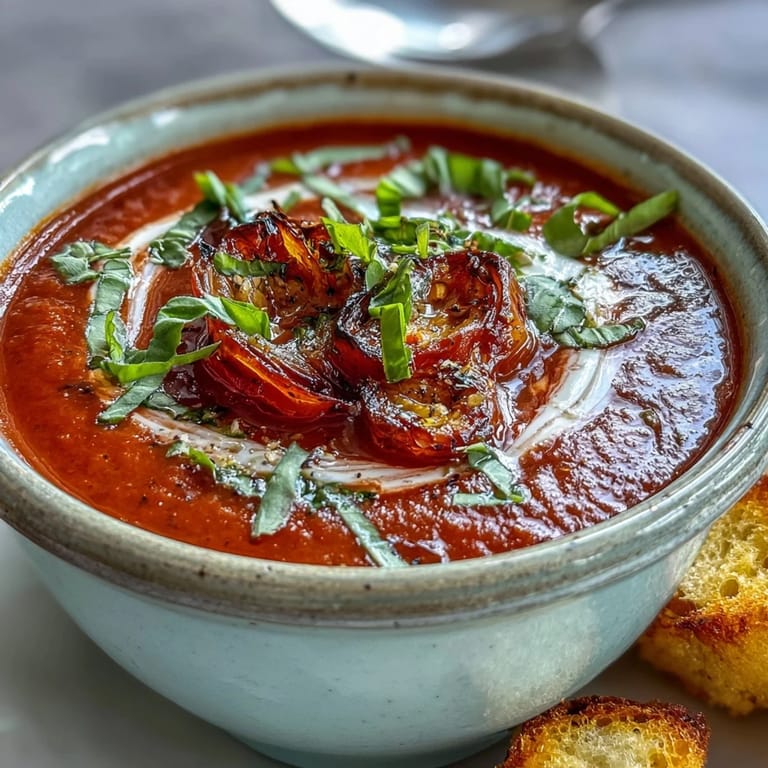
- Fresh basil: Added toward the end to preserve its brightness - I've tried dried basil in a pinch, but the difference is remarkable, so grow a little pot on your windowsill if you can.
- Heavy cream: Just a swirl before serving creates little clouds in the soup that make it feel indulgent without overwhelming the roasted flavors.
Tired of Takeout? 🥡
Get 10 meals you can make faster than delivery arrives. Seriously.
One email. No spam. Unsubscribe anytime.
Instructions
- Prep your veggies:
- Halve those gorgeous tomatoes and quarter the onion, leaving the pieces substantial enough to develop caramelized edges. I like to leave the tomato skins on - they carry so much flavor and will blend up beautifully later.
- Roast until magical:
- Spread everything on your baking sheet with plenty of room to breathe, and don't rush this part. You're looking for those dark, concentrated spots that signal the natural sugars have developed.
- Simmer and infuse:
- As you combine the roasted treasures with broth, take a moment to inhale that steam - it's intoxicating. The butter melts into little golden pools on the surface before disappearing into the mix.
- Blend with intention:
- If using an immersion blender, start slowly from the bottom to avoid splashing that gorgeous red everywhere (learned this the hard way while wearing a white shirt). Work in batches if needed, ensuring everything becomes silky smooth.
- Finishing touches:
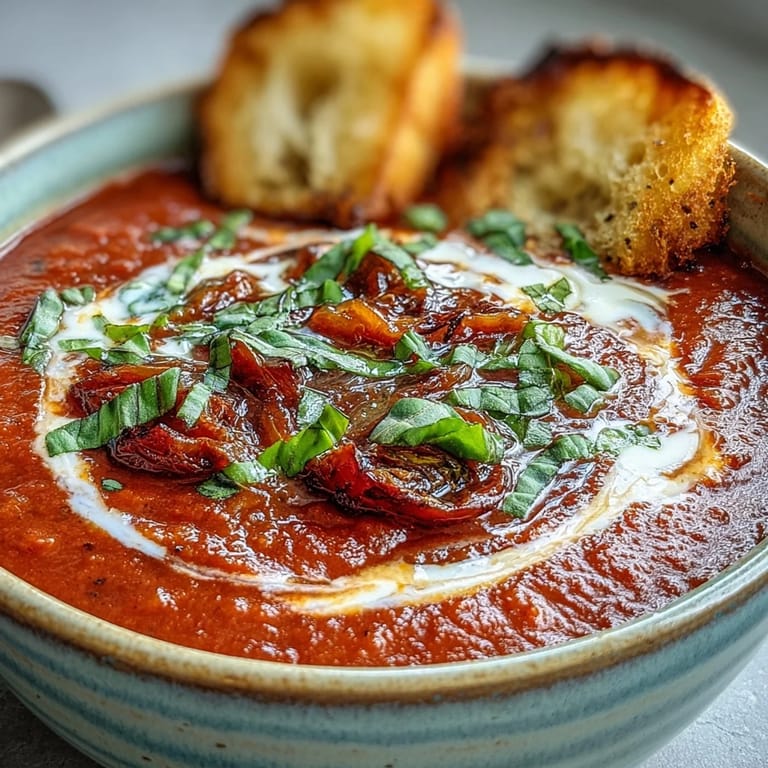
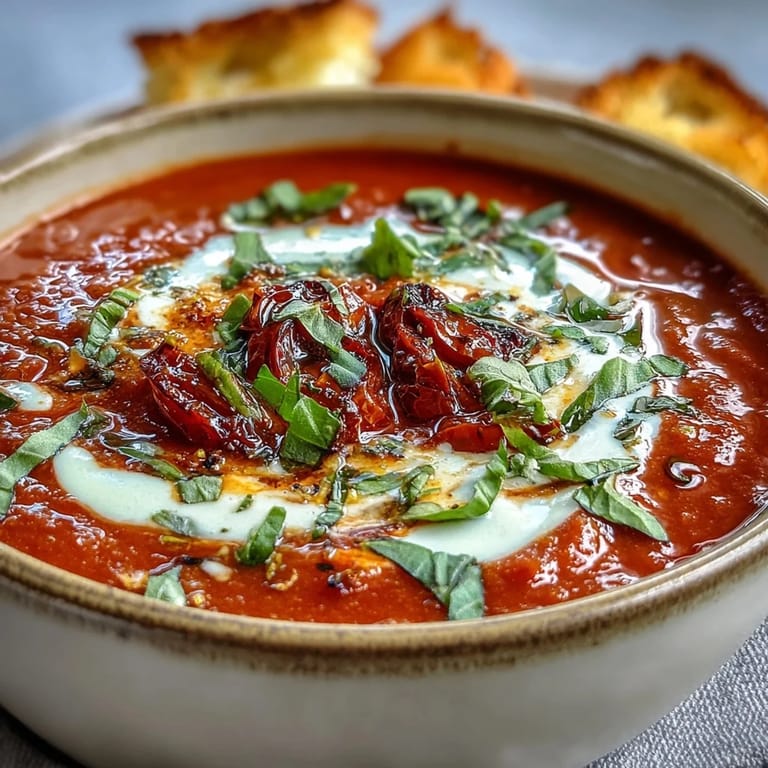
- This is where the soup becomes yours. A drizzle of cream creates beautiful swirls that you can drag through with the tip of a spoon, creating a marbled effect that's as pretty as it is delicious.
 Save
Save My daughter called from college once, homesick and fighting a cold, asking how to make this soup in her dorm microwave. We laughed together at the impossibility, but I overnight-shipped her a container packed in dry ice instead. She called the next day to tell me it was better than medicine - that eating it was like being wrapped in a blanket. That moment convinced me food really can cross distances when we can't.
The Tomato Selection Secret
I've made this soup with supermarket tomatoes in January and sun-ripened garden tomatoes in August, and the difference is remarkable. If you're stuck with out-of-season tomatoes, roasting becomes even more crucial - it concentrates what little flavor they have. Sometimes I'll add a tablespoon of tomato paste to winter versions, stirring it into the hot pan after the vegetables are transferred, letting it toast slightly before adding the broth. This builds back some of that summer intensity we're all chasing.
Making It Ahead
This soup actually improves overnight, as the flavors meld and deepen in the refrigerator. I often make a double batch on Sunday afternoons, cooling it completely before refrigerating portions for the week ahead. The texture might thicken slightly in storage - just thin with a splash of broth when reheating. For freezing, I leave out the cream entirely and add it fresh when serving, which prevents any separation or graininess that can happen with dairy in the freezer.
Serving Suggestions
While perfectly wonderful on its own, this soup becomes a complete meal with thoughtful accompaniments. I've served it with grilled cheese sandwiches made with sharp cheddar and sourdough for casual dinners, and as an elegant first course in small cups before a pasta main. The bright acidity of the tomatoes cuts through rich dishes beautifully, making it an excellent starter for heavier meals.
- For a stunning presentation, drizzle the cream in a spiral pattern and draw a toothpick through it from center to edge to create a spiderweb effect.
- Tiny homemade croutons add wonderful texture - just toss bread cubes with olive oil, salt, and herbs, then toast until golden.
- A small scoop of pesto instead of plain basil leaves transforms this into a different soup altogether - richer and more complex.
 Save
Save This soup has traveled with me through seasons and homes, always adapting slightly but remaining fundamentally comforting. I hope it brings the same warmth to your kitchen, whether made with precious summer tomatoes or as an act of defiance against winter.
Recipe FAQs
- → Can I freeze this soup?
Yes, this soup freezes exceptionally well for up to 3 months. Cool completely before transferring to airtight containers. Thaw overnight in the refrigerator and reheat gently, adding a splash of broth if needed to adjust consistency.
- → What tomatoes work best?
Roma, San Marzano, or vine-ripened tomatoes yield the best results due to their lower water content and intense flavor. Even less-than-perfect tomatoes become delicious through roasting, making this ideal for using end-of-season bounty.
- → How can I make it creamy without dairy?
Blend in a cooked potato or cannellini beans before pureeing for natural creaminess. Coconut milk or cashew cream also work beautifully as plant-based alternatives that maintain the luxurious texture.
- → Why roast the vegetables first?
Roasting concentrates natural sugars and creates deep caramelization that raw vegetables can't achieve. This essential step develops complex flavor layers, transforming simple ingredients into restaurant-quality depth.
- → Can I use canned tomatoes?
While fresh tomatoes are ideal, high-quality canned whole tomatoes work in a pinch. Drain them well and roast for just 20-25 minutes to develop some caramelization, though the flavor will be slightly less complex.