 Save
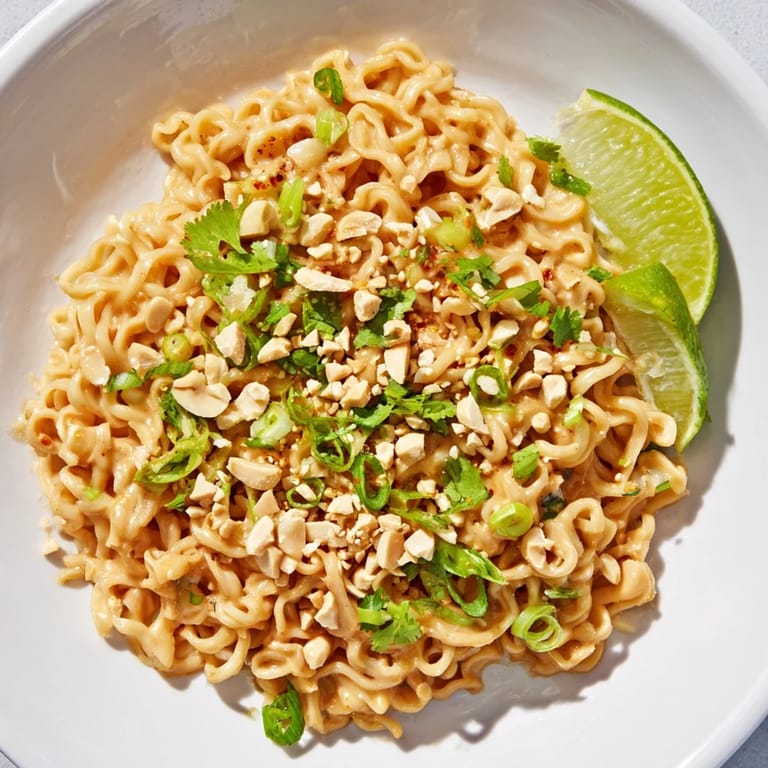
Save One Tuesday night when I had nothing in the pantry but instant ramen and a jar of peanut butter, I threw together something that tasted like I'd actually tried. The smell of sesame oil hitting the warm noodles made me pause—this wasn't going to be sad desk food. It became my go-to when I wanted something Thai-restaurant good in the time it takes to boil water.
I made this for my roommate on a random Thursday when she came home exhausted, and watching her face light up when she tasted it was the kind of small moment that sticks with you. She asked for the recipe before she'd even finished eating, which felt like the highest compliment a quick dinner could get.
Ingredients
- Instant ramen noodles (2 packs): Discard those flavor packets—they'll only get in the way of something better.
- Creamy peanut butter (3 tablespoons): The foundation of everything; natural or regular both work beautifully.
- Soy sauce (2 tablespoons): This is what brings the savory depth and makes it taste less like peanut noodles and more like Thai.
- Chili crisp (1 tablespoon): Start here and adjust up if you love heat; it's the ingredient that wakes everything up.
- Rice vinegar (1 tablespoon): A tiny bit of brightness that keeps the sauce from feeling heavy.
- Honey or maple syrup (1 tablespoon): The sweetness that balances chili and salt into something harmonious.
- Toasted sesame oil (2 teaspoons): Use the toasted kind—it has an aroma that changes the whole game.
- Garlic clove, minced (1): Fresh garlic matters here; jarred is fine in a pinch but fresh tastes notably brighter.
- Hot water (3–4 tablespoons): Reserved noodle water is ideal, but hot tap water works when you're in a hurry.
- Scallions, sliced (2): They add a sharp freshness that cuts through the richness.
- Roasted peanuts, chopped (1 tablespoon): For crunch and a nod to where this sauce comes from.
- Sesame seeds (1 teaspoon): A small amount goes a long way for nutty flavor and visual appeal.
- Fresh cilantro (a small handful, chopped): Optional but transforms a quick meal into something that feels intentional.
- Lime wedges: Squeeze one over the top just before eating for brightness.
Tired of Takeout? 🥡
Get 10 meals you can make faster than delivery arrives. Seriously.
One email. No spam. Unsubscribe anytime.
Instructions
- Boil the noodles:
- Cook them according to the package, then drain but save those 2–3 tablespoons of starchy water—it's the secret to a silky sauce that clings to every strand.
- Build the sauce:
- In a bowl, whisk together peanut butter, soy sauce, chili crisp, rice vinegar, honey, sesame oil, and minced garlic until it looks almost smooth, then add your reserved noodle water one tablespoon at a time until it's pourable and glossy.
- Toss everything together:
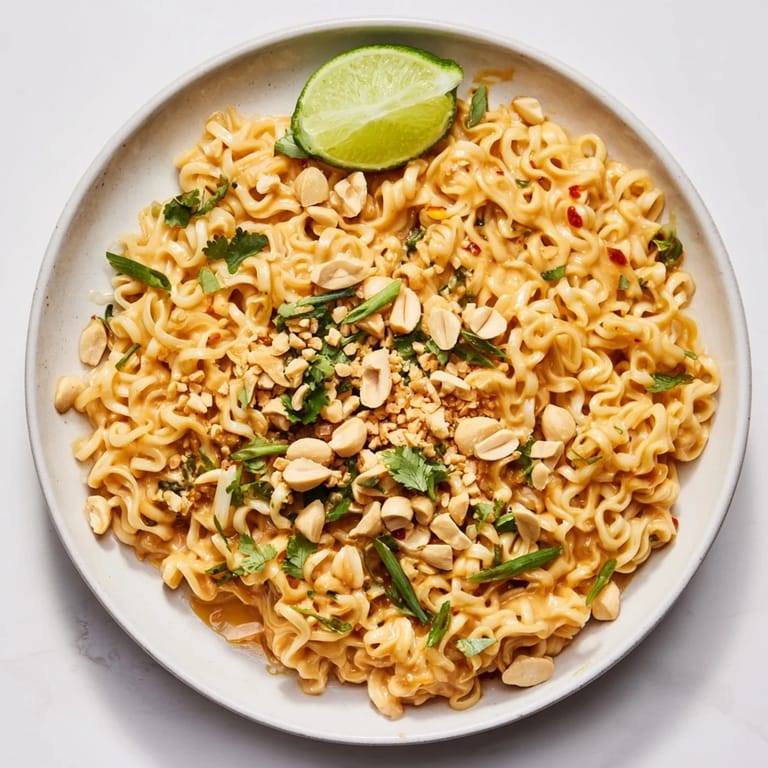
- Pour the sauce over the warm noodles and toss until every strand is coated in that creamy, spicy goodness.
- Plate and top:
- Divide between two bowls and scatter your scallions, peanuts, sesame seeds, and cilantro on top, then squeeze lime over everything.
- Eat right away:
- The noodles are best when they're still warm and the sauce hasn't started to thicken up.
 Save
Save There's something honest about a meal that takes less time to cook than to eat, yet still makes you feel cared for—whether you're cooking for someone else or just treating yourself. This dish proves that shortcuts in the kitchen don't have to mean shortcuts in flavor.
The Sauce Is Everything
I learned this the hard way by making a version where I skipped the rice vinegar to save a step. The sauce was flat and one-dimensional until I went back and added it—suddenly everything balanced out and tasted alive. It's not about having more ingredients; it's about the right ones doing their job. Peanut butter gives body, soy sauce gives depth, chili crisp gives fire, honey gives sweetness, and vinegar brings everything into focus. Think of the sauce as a conversation where each voice needs to be heard.
Making It Your Own
The beauty of this recipe is that it handles improvisation well. Add a soft-boiled egg or pan-seared tofu for protein, toss in steamed broccoli or stir-fried bell peppers for vegetables, or swap the peanut butter for almond or sunflower seed butter if you have allergies. I've made it with leftover rotisserie chicken shredded on top, and I've made it as-is when I wanted something purely vegetarian. Every version has been good, which tells you the base is solid.
Timing and Technique
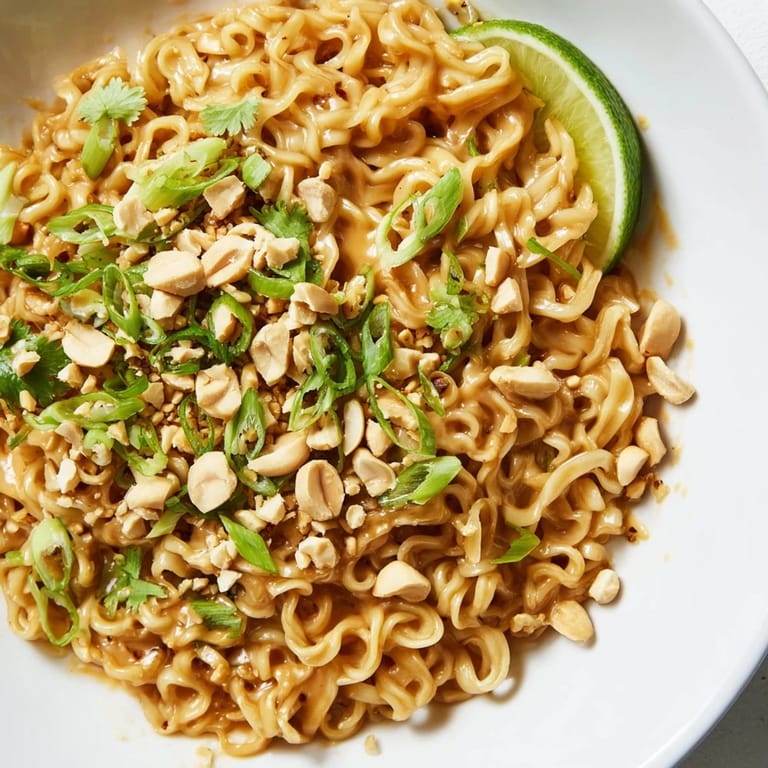
This dish lives or dies by temperature and speed. You want the noodles to still be warm when you toss them so the sauce coats smoothly and everything melds together. Cold noodles will make the sauce clump up, and nobody wants that. The whole process from dry noodles to bowl takes about ten minutes, which is why this works as a weeknight dinner or a late-night snack when you need something filling and satisfying.
- Start whisking your sauce while the noodles cook so you're ready the moment they're drained.
- If the sauce seems too thick after sitting for a minute, add a splash of hot water and whisk it back to pourable consistency.
- Taste as you go—your chili crisp, soy sauce, and honey may vary in intensity, so trust your palate over the recipe.
 Save
Save This recipe is proof that the best meals often come from necessity and a half-empty pantry. Once you make it once, you'll reach for it again and again.
Recipe FAQs
- → How can I adjust the spice level in this dish?
Modify the amount of chili crisp added to the sauce to suit your preferred spice tolerance.
- → What can I use instead of peanut butter?
For nut-free options, substitute peanut butter with almond butter or sunflower seed butter.
- → Can I add protein to the noodles?
Yes, consider pan-seared tofu, grilled chicken, or a soft-boiled egg to boost protein content.
- → Are there gluten-free noodle alternatives?
Use gluten-free noodles and tamari sauce instead of soy sauce to make it gluten-free friendly.
- → How do I achieve a smooth sauce consistency?
Whisk in hot water gradually until the peanut butter mixture is smooth and pourable.