 Save
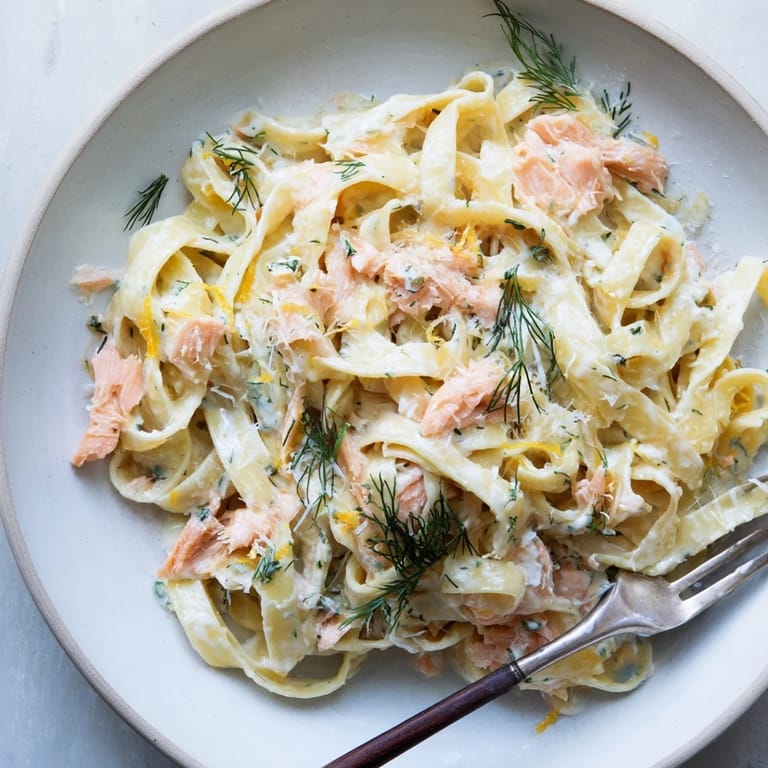
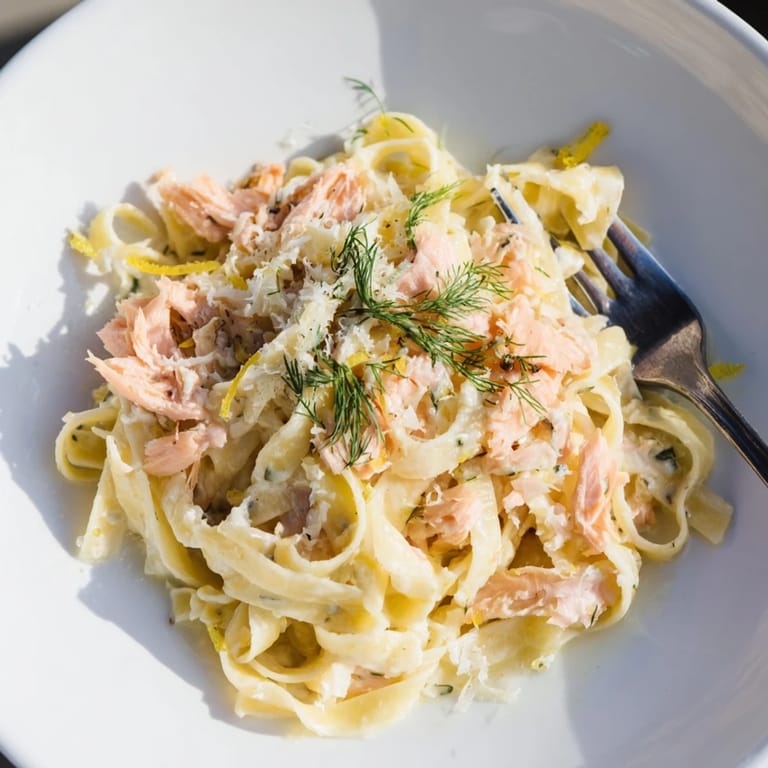
Save The first time I made this salmon pasta, I stood over the stove watching the cream bubble and wondered if I'd added too much lemon. But then that first bite happened and the smoky salmon hit against the bright citrus and I stopped worrying completely.
Last Tuesday my friend Sarah dropped by unexpectedly and I threw this together while she told me about her day. By the time the story ended, dinner was ready and she was already asking for the recipe.
Ingredients
- 350 g (12 oz) dried fettuccine or spaghetti: Choose a pasta shape that catches the sauce well, though any long noodle works beautifully here
- Salt for pasta water: Don't skip this, properly salted water is the only seasoning your pasta gets
- 2 tbsp unsalted butter: Forms the foundation of your sauce along with a bit of olive oil
- 2 cloves garlic, minced: Fresh garlic makes all the difference, avoid jarred minced garlic here
- 1 small shallot, finely chopped: Shallots give a milder, sweeter flavor than regular onions
- 200 ml (3/4 cup + 2 tbsp) heavy cream: Creates that luxurious silky texture we're after
- 1 tsp Dijon mustard: The secret ingredient that cuts through the richness
- Zest and juice of 1 lemon: Brightens everything and balances the smoked fish
- 100 ml (scant 1/2 cup) reserved pasta cooking water: Liquid gold that helps emulsify your sauce
- Freshly ground black pepper, to taste: Plenty of it, it complements the salmon perfectly
- 150 g (5 oz) hot-smoked salmon, flaked: The star of the show, already cooked and packed with flavor
- 30 g (1/4 cup) grated Parmesan cheese: Adds a salty, nutty finish
- 2 tbsp chopped fresh dill or flat-leaf parsley: Dill pairs naturally with salmon, but parsley works too
Tired of Takeout? 🥡
Get 10 meals you can make faster than delivery arrives. Seriously.
One email. No spam. Unsubscribe anytime.
Instructions
- Get your pasta water going:
- Bring a large pot of salted water to a boil, then cook the pasta until al dente before reserving some cooking water and draining
- Build your flavor base:
- Melt butter in a large skillet over medium heat, then sauté the garlic and shallot for 2 to 3 minutes until soft and fragrant
- Create the creamy sauce:
- Stir in the heavy cream, Dijon mustard, lemon zest, and juice, then let it simmer gently for 2 to 3 minutes
- Add the star ingredient:
- Fold in the flaked hot-smoked salmon and half of the chopped herbs, stirring gently just to warm everything through
- Bring it all together:
- Toss the drained pasta into the skillet, adding pasta water as needed to loosen the sauce, then sprinkle in the Parmesan and toss until coated and silky
- Finish with flair:
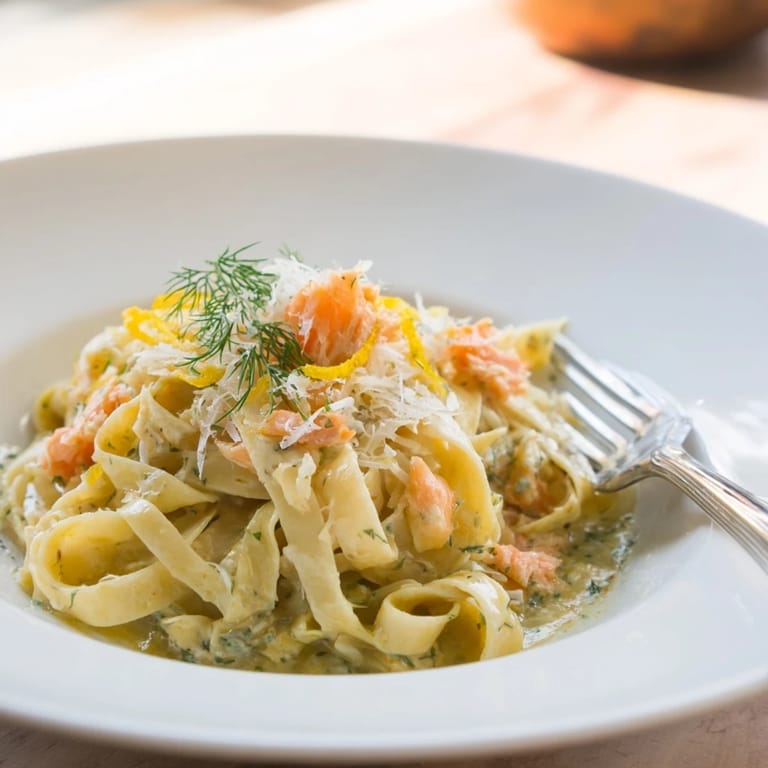
- Season generously with black pepper and adjust salt if needed, then serve immediately topped with remaining herbs and extra lemon zest
 Save
Save This recipe has become my go-to when I want something impressive but effortless, the kind of meal that makes people feel taken care of without you spending hours in the kitchen.
Choosing Your Salmon
Hot-smoked salmon is completely different from the cold-smoked salmon you'd put on a bagel. It's cooked through during smoking, giving it a flaky texture and intense smoky flavor that transforms simple cream into something extraordinary.
Making It Lighter
On nights when I want something less rich, I'll use half cream and half milk. The sauce still coats the pasta beautifully, just with a slightly lighter touch that doesn't weigh you down afterward.
Perfect Pairings
A crisp white wine like Sauvignon Blanc cuts through the cream while echoing the citrus notes. A simple green salad with a vinaigrette helps balance the richness.
- Keep some extra lemon wedges on hand for squeezing at the table
- Crusty bread is perfect for mopping up any remaining sauce
- This pasta actually tastes great as leftovers, though the sauce thickens in the fridge
 Save
Save There's something deeply satisfying about a recipe that delivers so much flavor with so little fuss. This pasta is the kind of dinner that turns an ordinary Tuesday into something worth remembering.
Recipe FAQs
- → Can I use fresh salmon instead of hot-smoked?
Fresh salmon works, though you'll need to cook it first. Pan-sear or poach fresh salmon fillets until just cooked through, then flake into the sauce. Hot-smoked salmon adds distinctive depth and requires no additional cooking time.
- → What pasta shapes work best?
Long strands like fettuccine, spaghetti, or linguine are ideal for coating with the creamy sauce. Short shapes like penne or rigatoni also work well—the ridges catch the sauce beautifully.
- → Can I make this ahead?
The sauce reheats well, though pasta is best served immediately. Store components separately: sauce in the refrigerator for up to 2 days, and cook fresh pasta when ready to serve. Toss together with a splash of pasta water to reconstitute.
- → How do I prevent the sauce from separating?
Keep heat at a gentle simmer—high heat can cause cream to separate. The pasta water starch helps emulsify everything. If sauce appears broken, whisk vigorously off-heat while adding another tablespoon of pasta water.
- → What can I substitute for heavy cream?
Half-and-half works for a lighter version, though the sauce will be less rich. For dairy-free options, try full-fat coconut milk or cashew cream—the flavor profile will shift slightly but remains delicious.